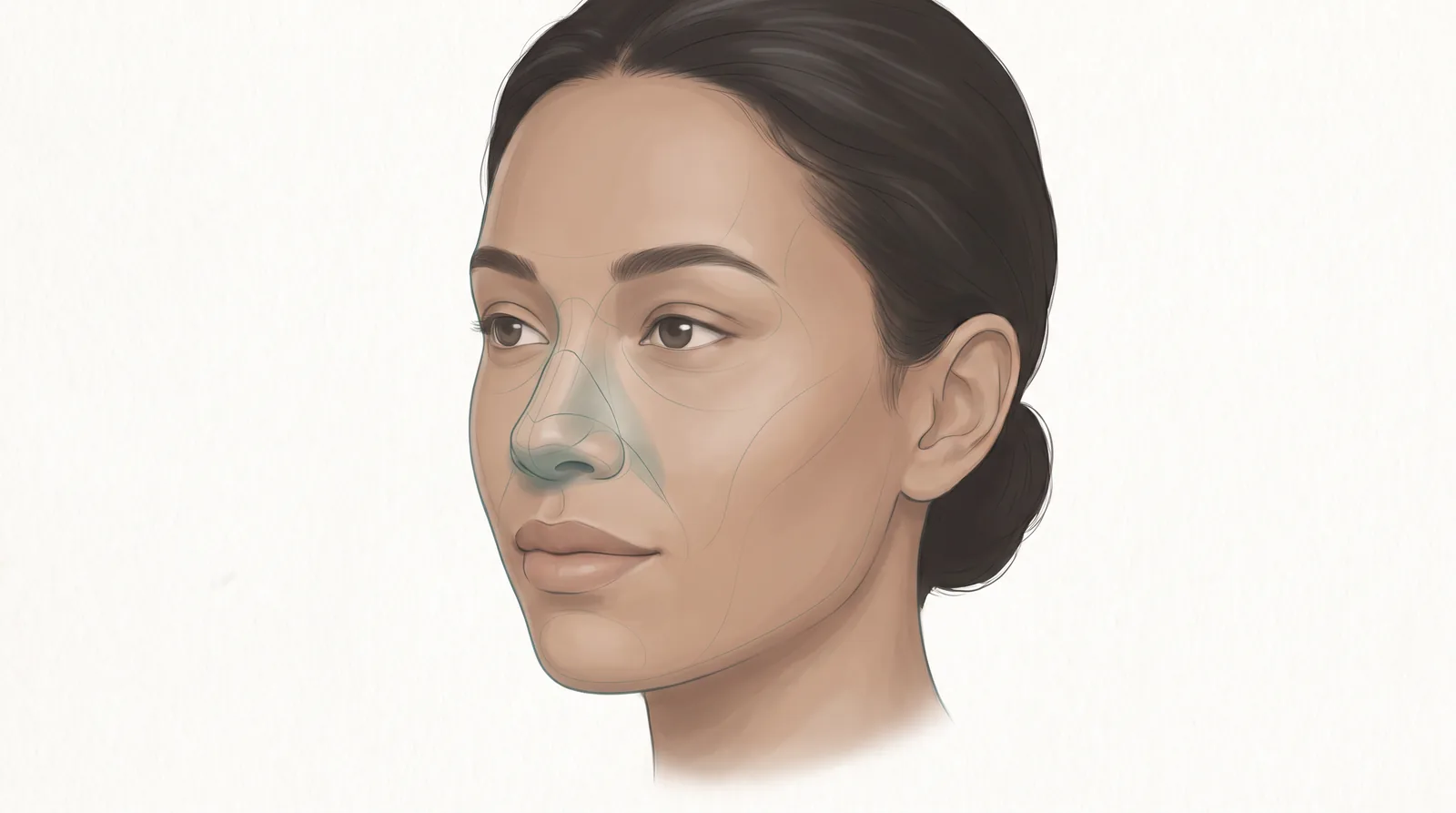
A personal decision that begins with assessment
Rhinoplasty can change the nose’s shape, size, or proportions. It may also be planned to address selected breathing concerns. It is not a one-size-fits-all procedure: suitability depends on the individual’s anatomy, health, goals, and the relationship between the nose and the rest of the face. A consultation with a qualified surgeon in Dubai is the appropriate setting to decide whether surgery is suitable; an online article or photograph cannot make that decision.
A good candidate is not simply someone who wishes for a smaller or straighter nose. The most suitable patient is usually seeking the procedure for personal reasons, has completed facial growth, is in suitable general health, does not smoke, and understands that surgery aims for improvement rather than perfection. A positive outlook and realistic goals are important parts of a safe discussion.
The aesthetic assessment: more than one feature
Aesthetic planning starts by listening. Some people are concerned about a bridge prominence, asymmetry, tip shape, width, nostril appearance, or a nose that appears out of proportion after an injury. The surgeon then considers the whole face and profile rather than isolating one feature. Nasal skin thickness, cartilage strength, existing asymmetry, facial proportions, and the specific change requested can all affect what may be advisable and how predictably it can be achieved.
Standardised photographs from several angles may be part of the consultation. If image simulation is used, it supports a focused conversation about possibilities and limitations; it is not a promise of an identical postoperative appearance. The discussion should cover what matters most to the patient, the surgical trade-offs, visible scarring where relevant, and the normal possibility of residual asymmetry.
Bring reference images if they help explain a preference, but use them as a starting point—not a template. Another person’s nasal skin, cartilage, facial balance, and healing response are different. A thoughtful plan should respect the individual’s facial character and, where relevant, ethnic identity.
Breathing is assessed before appearance is changed
A nose that looks refined but does not breathe well is not an appropriate goal. The American Academy of Otolaryngology–Head and Neck Surgery guideline recommends evaluation for nasal airway obstruction before rhinoplasty. During the appointment, the clinician may ask about persistent blockage, side-to-side differences, sleep, allergy symptoms, trauma, prior nasal surgery, use of nasal sprays, and whether activity is limited by breathing. Examination of the outside and inside of the nose helps identify factors that may affect airflow, such as septal deviation, valve narrowing, or turbinate enlargement. The examination—not a self-test online—guides whether functional steps need discussion.
Rhinoplasty can affect nasal breathing, and surgery may not resolve every breathing symptom. If there is diagnosed obstructive sleep apnea, this should be discussed because it may affect peri-operative planning and counselling. The same guideline also notes that candidates should be informed about possible effects on breathing, potential complications, and the possible need for future nasal surgery.
Health, healing, and psychological readiness
A responsible assessment includes medical history, previous nasal injury or surgery, medications and supplements, allergies, smoking or nicotine exposure, and conditions that may affect anaesthesia, bleeding, infection risk, or healing. Bleeding disorders, for example, can change whether or how surgery is considered. Candidates should give a complete history and follow their surgeon’s instructions about medicines and nicotine; stopping or changing prescribed medication should only occur under medical direction.
Motivation matters as much as measurements. A consultation should explore why the person wants surgery now and whether the hoped-for change is realistic. The guideline advises clinicians to assess conditions that could modify or contraindicate surgery, including body dysmorphic disorder, bleeding disorders, obstructive sleep apnea, and chronic use of topical intranasal vasoconstrictors. This is a safety-focused conversation, not a label or a diagnosis from an appearance concern alone.
When it may be better to pause
It may be sensible to postpone a decision when facial growth is incomplete, nicotine use is ongoing, a medical issue is not optimised, expectations rely on perfection or external pressure, or a breathing complaint needs fuller assessment. A surgeon may also advise that a requested change could compromise support or airflow, or that surgery is not the best next step. This is careful clinical judgement, not a failure of the consultation.
What to prepare for your consultation in Dubai
Write down what you would like to change visually and any breathing symptoms, including when they occur. Bring details of previous nasal procedures or injuries, your medication and supplement list, relevant medical reports, and questions about downtime, risks, and recovery. Ask the surgeon how your anatomy influences the plan, how breathing will be protected or assessed, and what uncertainty remains. Rhinoplasty carries risks, including bleeding, infection, breathing difficulty, scarring, change in sensation or smell, asymmetry, and possible additional surgery; the clinician should explain how these apply to you.
For a considered next step, book a private consultation to discuss **Rhinoplasty**. The doctor can assess your nose in person, review form and function together, and advise whether surgery is appropriate for your circumstances.
A considered next step
For a personal assessment, visit the rhinoplasty procedure page and request a consultation with the medical team. Suitability, options and risks can only be determined after an in-person evaluation.
Frequently Asked Questions
Can rhinoplasty be considered if I have trouble breathing through my nose?
Possibly, but breathing symptoms need an in-person assessment. The surgeon should evaluate nasal airway obstruction and explain whether structural findings may influence the plan. Rhinoplasty does not guarantee that every breathing symptom will resolve.
What will the surgeon assess during a rhinoplasty consultation?
The consultation commonly covers your goals, medical and nasal history, medicines, prior injury or surgery, facial and nasal examination, breathing, photographs, and expectations. The exact assessment is tailored to the person.
Does a digital simulation show my guaranteed result?
No. If used, a simulation is a communication and planning aid. Healing, anatomy, skin characteristics, and surgical limitations mean it cannot guarantee a particular final appearance.
When might a surgeon advise waiting before rhinoplasty?
A surgeon may advise waiting if facial growth is incomplete, nicotine use continues, health issues require optimisation, expectations are not realistic, or breathing concerns need further assessment. The decision is made after a personal consultation.