The word "refinement" can mean very different things from one person to another. For someone considering rhinoplasty, the goal may be to soften a feature that has long felt distracting, address asymmetry after an injury, or explore a change while keeping the nose recognisably their own. In a city as diverse as Dubai, conversations about nose shape can also carry family, cultural and personal meaning. A thoughtful plan does not assume that every patient wants a narrower bridge, a higher tip or the same profile. It starts by asking what identity-preserving change means to that individual.
Identity-preserving rhinoplasty is not a separate operation with one look or one rulebook. It is a way of planning. The central question is not "What should this nose look like?" but "Which characteristics feel like me, and which concern would I like to discuss?" That distinction helps move the conversation away from imported ideals and toward informed, individual choices. It also leaves room for a patient who wants a noticeable change: preserving identity does not mean forbidding change. It means making the purpose, limits and trade-offs clear before a decision is made.
Identity Is Personal, Not a Nasal Template
Terms such as ethnic rhinoplasty are widely used, but they need care. They can be useful when they remind a surgical team to respect cultural identity and to consider differences in skin, cartilage and facial proportion. They become unhelpful when they imply that everyone from a broad background has the same anatomy, aesthetic preference or relationship with a facial feature. Research on regional nasal anatomy shows substantial variation within populations. A label should therefore never replace an examination or a patient’s own description of what matters.
A person may value a bridge that resembles a parent’s, the width of the base when smiling, a gentle curve in profile, or simply the fact that friends recognise their face. Another person with a similar heritage may feel differently. Neither preference is more authentic. The ethical task is to hear the patient’s language without translating it into a stereotype. Questions such as "What do you hope will stay familiar?" and "What would make the result feel unlike you?" often produce more useful information than asking a person to choose a nose from a category.
This approach also recognises that identity has more than one source. It can include family resemblance, gender expression, age, faith, personal style and the experience of living between cultures. It can change over time. The aim is not to assign a cultural meaning to a feature; it is to give the patient room to explain its meaning, if it has one. A respectful consultation does not require someone to defend their appearance or prove an ethnic identity.
Make a Preserve-and-Refine Map
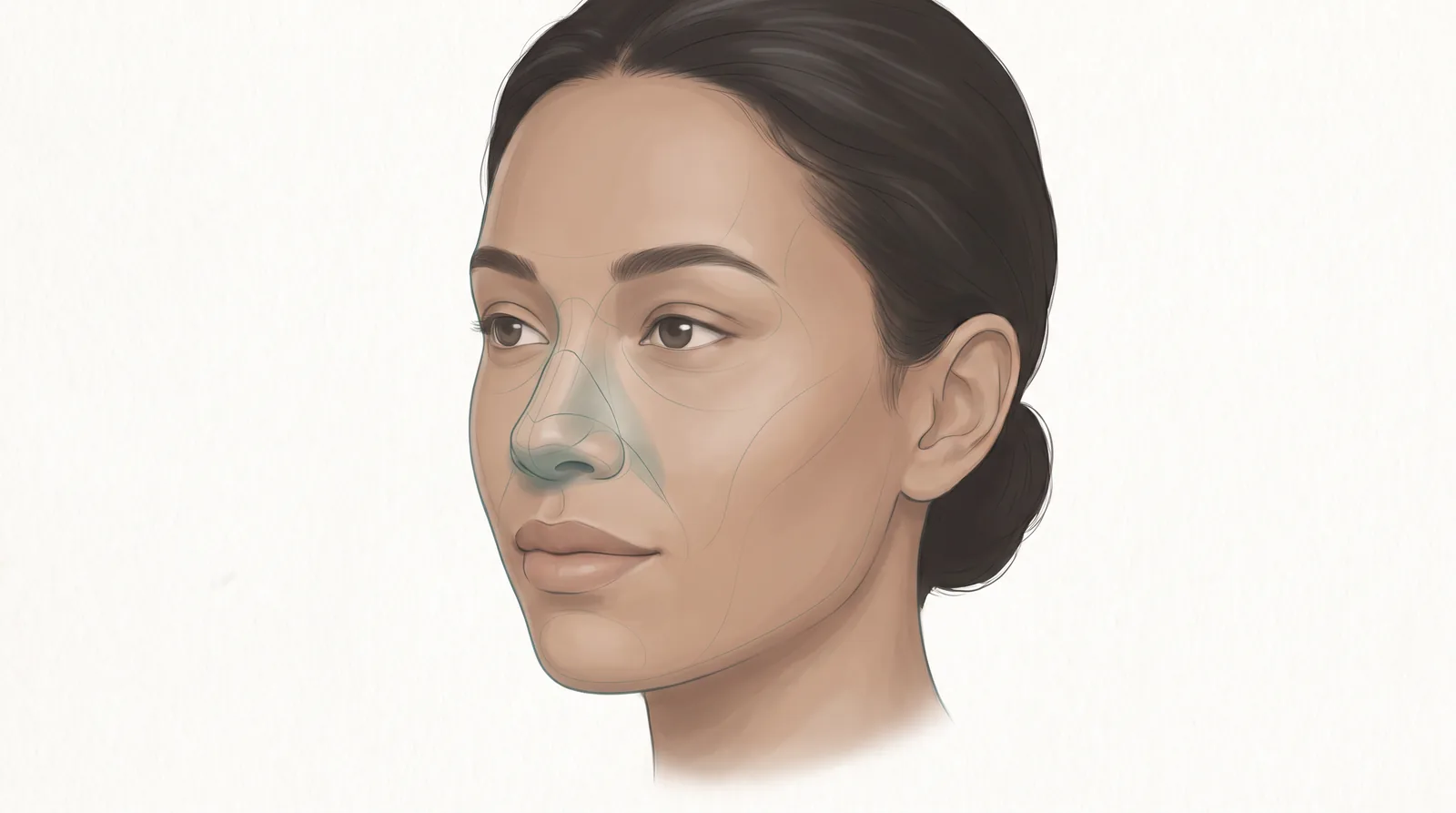
One practical way to improve clarity is to create a "preserve-and-refine" map during consultation. This is not a surgical blueprint or a promise of an outcome. It is a shared communication tool that separates positive anchors from concerns. Positive anchors are the parts of the nose or face that the patient wants to retain. Concerns are the specific features they would like assessed, such as a profile irregularity, a tip that appears downturned in photographs, asymmetry, or an airway complaint.
Specific language matters. "Make it smaller" may mean reducing a bump, altering the sense of projection, changing how the tip relates to the upper lip, or simply wanting a less dominant appearance in certain photographs. Those are different concerns with different anatomical implications. Likewise, "keep it natural" is valuable but incomplete until it is connected to concrete features and facial views. Front, three-quarter and profile perspectives may not tell the same story. A detailed discussion can identify where preferences are consistent and where they conflict.
Photographs and, where appropriate, digital image discussion can help make this conversation more precise. They can show facial proportions and allow the patient to point to features rather than rely on vague terms. They should be treated as educational illustrations, not as a forecast or a contract. Healing, skin characteristics, underlying support and normal asymmetry all influence how a result develops. A responsible clinician explains what an image can clarify and what it cannot predict.
Patients can prepare for this conversation without arriving with a fixed design. It may help to write down two or three changes to discuss and two or three qualities to protect. Think about the nose in motion as well as in still images: expression, smiling and the transition to the cheeks and upper lip can matter. Bringing examples of what feels familiar or unfamiliar can help communicate preferences, but another person’s result is not a template for your anatomy. The consultation should test goals against the individual face rather than copy a reference.
Assess Proportion, Skin, Support and Airflow Together
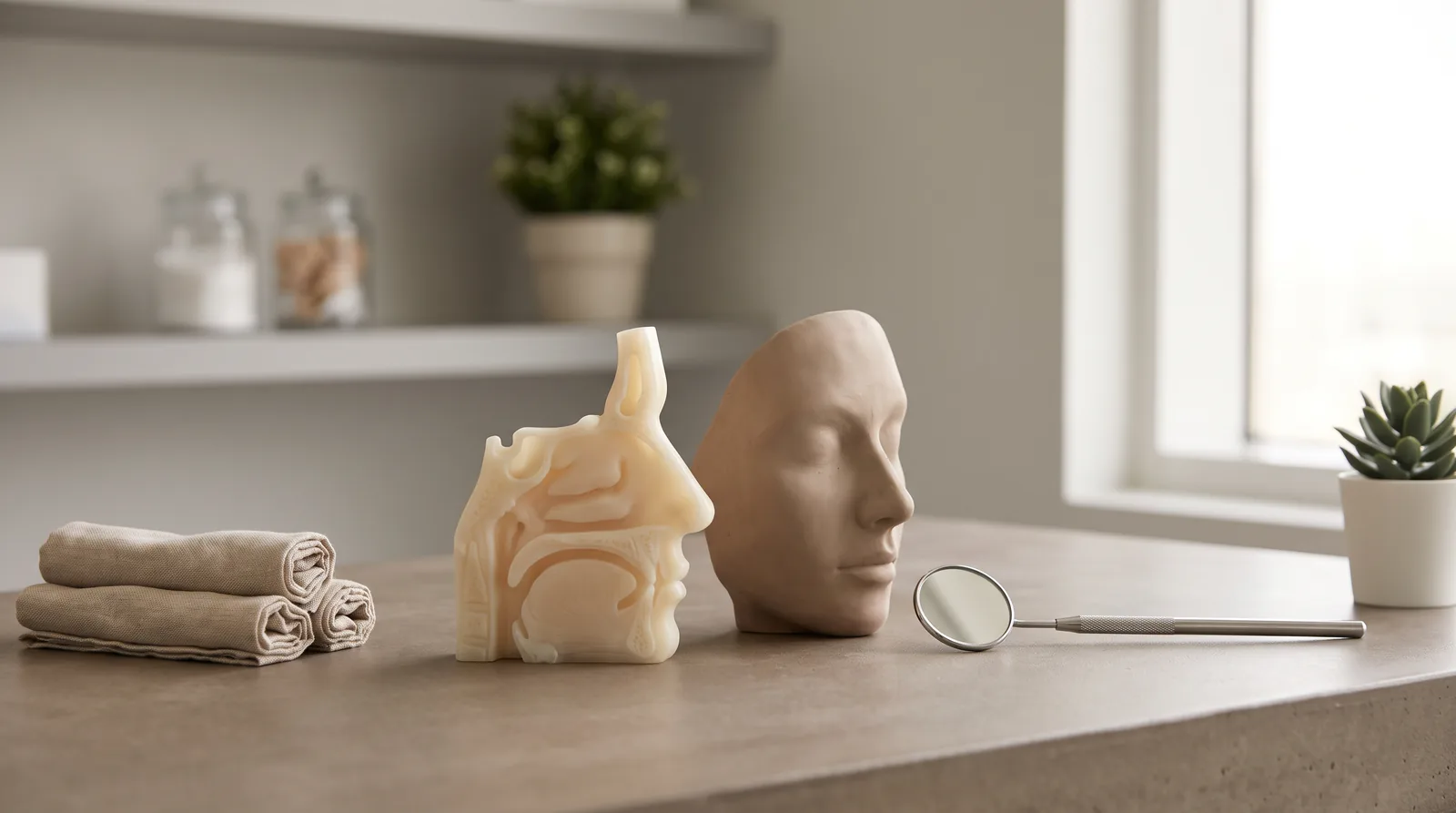
An identity-conscious plan still has to be anatomically sound. The nose is a three-dimensional structure supported by bone and cartilage, covered by skin and closely connected to breathing. A visible feature may reflect several structures at once. For example, tip definition depends not only on cartilage but also on skin thickness, soft tissue, support and how the tip relates to the bridge and base. Changing one element can alter the balance of another.
That is why assessment should look beyond a single requested feature. It commonly includes the outside and inside of the nose, facial balance, prior injury or surgery, medical history and medicines, as well as symptoms of obstruction. A person who has difficulty breathing through the nose, notices collapse with deep inhalation, has a known septal problem or has sleep-related breathing concerns should mention these issues. Appearance and nasal function are not competing topics; they need to be considered together.
Structural restraint can be important. Removing or narrowing tissue solely to meet an image goal may not suit every nose, particularly if support needs to be maintained. In some situations, refinement involves preservation, repositioning or support rather than reduction. In others, the requested aesthetic change may be limited by skin behaviour, scar tissue, previous procedures or the need to protect airflow. These are not failures of planning. They are the biological boundaries that make an honest discussion essential.
The consultation should also include a review of previous nasal surgery, trauma, allergies, nasal sprays and general health factors that could influence suitability or healing. A clinician may raise concerns about unrealistic expectations, distress focused intensely on appearance, or health conditions that require further assessment. Taking time to pause, seek more information or decide against surgery can be an appropriate safety outcome.
Treatment Limits and Safety
Rhinoplasty can change selected aspects of nasal shape and may be combined with treatment of certain structural causes of obstruction, but it cannot create perfect symmetry, erase every inherited characteristic or guarantee a particular social or emotional response. Faces are naturally asymmetric, photographs can distort proportions, and tissues heal individually. Even carefully planned changes may be perceived differently in mirrors, photographs and everyday interaction. The final appearance evolves as healing progresses, so responsible consent avoids fixed timelines and guarantees.
Like other surgery, rhinoplasty carries risks. These can include bleeding, infection, reactions to anaesthesia, visible or internal scarring, persistent or new breathing difficulty, altered sensation, prolonged swelling, asymmetry, septal perforation, changes in smell and the possible need for further treatment. The relevance of each risk varies with the person and the planned procedure. Ask who will perform the operation, whether the facility is appropriately accredited, how airway concerns will be assessed and what follow-up is available. Credentials, experience in rhinoplasty and clear communication all matter.
Safety also includes decision-making conditions. A consultation should give enough time to ask questions, consider alternatives and decline a procedure without pressure. It is reasonable to request an explanation in a language you understand and to involve a trusted support person if you wish. If a consultation repeatedly dismisses the features you value, pushes one aesthetic ideal or avoids discussion of breathing and complications, a second opinion may be helpful.
Frequently Asked Questions ### Can I ask to preserve a family trait and still discuss a change?
Yes. A planning conversation can identify a feature that feels important to preserve while assessing another feature that concerns you. The two goals may be compatible, partly compatible or in tension. The purpose of consultation is to explain those relationships honestly, not to assume that preserving identity means making no change at all.
Does identity-preserving rhinoplasty mean a surgeon will use a standard approach for my background?
No. A background label cannot predict your anatomy, skin, priorities or definition of a good result. An individual assessment should guide planning. Cultural awareness is valuable when it makes the conversation more respectful, not when it substitutes a category for the person in front of the clinician.
Can digital imaging show exactly how I will look?
No. Imaging can be useful for discussing proportions and identifying where expectations differ, but it is a communication aid. It cannot fully account for tissue response, healing, skin characteristics or small anatomical differences. It should support informed consent rather than be treated as a guaranteed result.
**Medical note:** This article is general education, not a diagnosis or personal surgical advice. A qualified clinician must assess your health, nasal anatomy, breathing and goals before advising on any procedure. Seek prompt medical care for significant breathing problems, uncontrolled nosebleeds, fever or concerns after any operation.
If you would like to discuss a patient-led, anatomy-aware approach to nasal refinement, explore our rhinoplasty service and arrange a consultation where your priorities, questions and safety considerations can be reviewed.