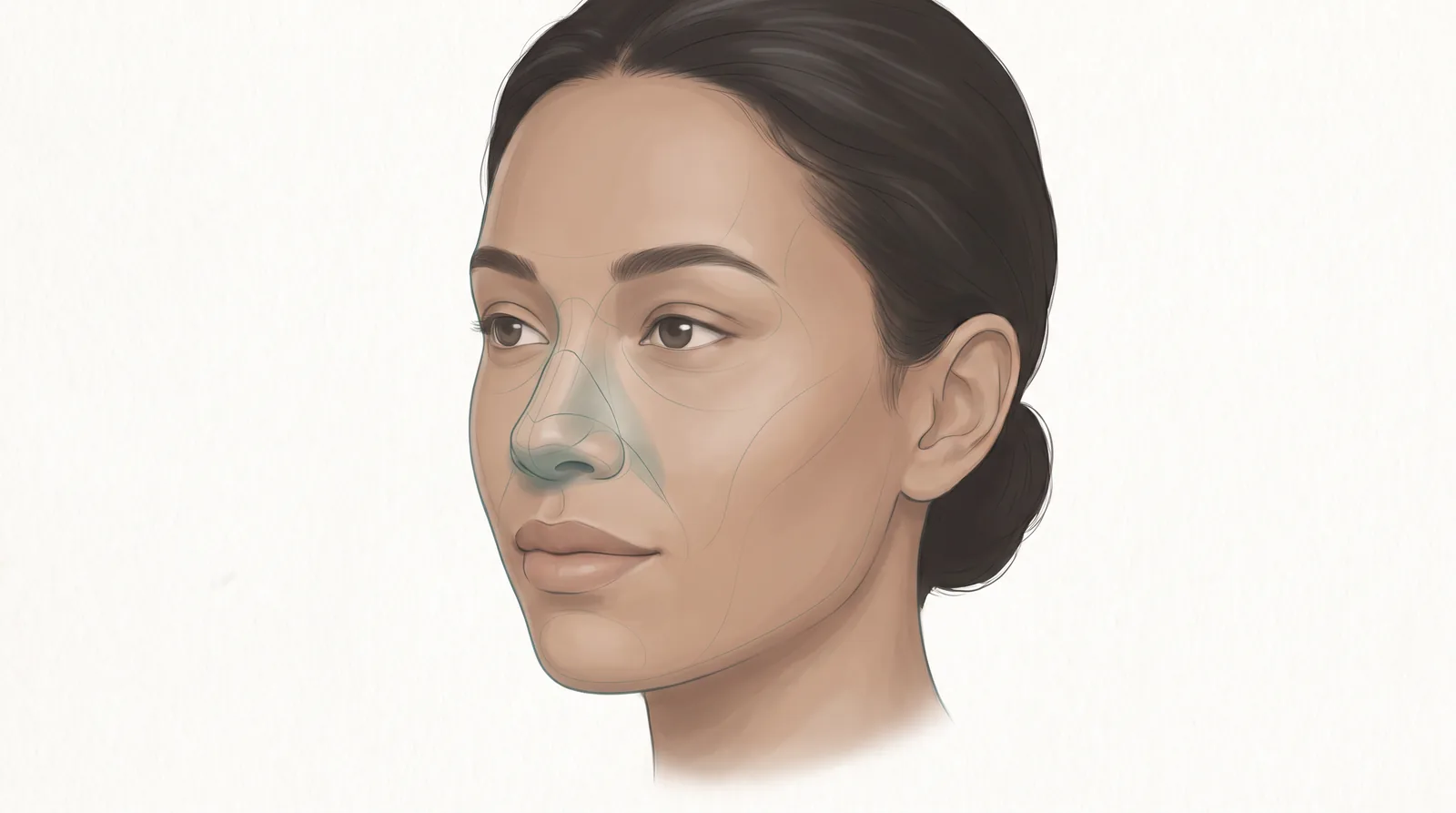
A blocked nose and a wish to alter nasal appearance can occur in the same person, but they are not the same clinical question. **Septoplasty** focuses on the septum, the internal wall of cartilage and bone that separates the two nasal passages. **Rhinoplasty** changes aspects of the nose’s external form and may, in selected situations, also be planned around function. When both concerns are present, it can be tempting to describe the decision as one simple ‘nose operation.’ A safer and more useful approach is to assess breathing and appearance as separate needs first, then decide whether any part of the plan should overlap.
That distinction protects the quality of the conversation. A person may have a visibly straight nose with troublesome nasal obstruction. Another may have an external concern while breathing comfortably. A third may have an old injury that affects both the outer framework and the airway. The right plan depends on anatomy, symptoms, health history and goals—not on a label alone.
Septoplasty starts with an airway question
Septoplasty is intended to address deviation of the nasal septum when that internal deviation is thought to contribute to symptoms. The assessment begins with the lived experience of airflow, rather than with a photograph. A clinician may ask whether blockage is one-sided or alternating, whether it is constant or episodic, and whether it changes with sleep, exercise, colds, allergy seasons or body position. Prior injury, previous nasal surgery, recurrent nosebleeds, sinus concerns, medication use and sleep-related symptoms can all matter to the discussion.
Symptoms alone do not identify the cause. Nasal obstruction can involve more than a deviated septum. The lining of the nose may be swollen; the turbinates, which help warm and humidify air, may be enlarged; the nasal valve region may lack adequate support; or there may be other nasal or sinus conditions. This is why an airway assessment normally considers the outside of the nose as well as the internal passages. An intranasal examination helps the clinician look for the pattern of septal deviation and for other possible contributors. In some situations, nasal endoscopy or imaging may be considered, but these are selected according to the clinical question rather than assumed to be necessary for everyone.
The aim is not simply to identify a bend in the septum. Many people have some septal asymmetry without meaningful symptoms. The key issue is whether the findings, the symptoms and the likely benefit of treatment align. If inflammation, allergy or another non-septal factor is the main driver, straightening the septum alone may not address the whole problem. Equally, a person with clear structural narrowing may still need a conversation about the limits of symptom improvement.
Rhinoplasty begins with form, proportion and personal goals
Aesthetic planning has a different starting point: what specifically does the person notice, and what change would feel appropriate to them? The discussion may include the bridge, tip, nostril shape, width, projection or the nose’s relationship to the chin, lips, forehead and overall facial proportions. This is not a search for a universally ‘ideal’ nose. Faces are naturally asymmetric, and a plan should respect individual features, skin characteristics and cultural identity rather than impose a template.
A careful aesthetic assessment uses views beyond the front of the face. Profile, three-quarter and basal perspectives may reveal different concerns. The thickness and quality of nasal skin, the strength of cartilage, the existing support of the tip, prior trauma and healing history can influence what changes are reasonable to discuss. Clinical photographs create a shared baseline. If digital imaging is used, it can help clarify the direction of a conversation, but it is an educational tool—not a promise, a blueprint or a guarantee of a surgical result.
It is helpful to translate broad wishes such as ‘smaller’ or ‘more refined’ into priorities and boundaries. Which feature matters most? Which familiar feature should remain? Is the goal to soften a profile, improve balance or repair a trauma-related contour? These questions make the plan more precise while leaving room for the limits imposed by anatomy and safe structural support. An aesthetic request also deserves space away from the pressure to justify it through breathing symptoms that may not be present.
Where the two assessments meet—and where they should not be merged
The septum contributes to the internal airway, but it is also part of the nose’s supporting structure. Similarly, changing the external framework can affect spaces through which air passes. For this reason, airway assessment is relevant when rhinoplasty is being considered, even if appearance is the main reason for the consultation. Conversely, a septoplasty discussion should acknowledge when correcting a complex deviation may affect the external nose or when an external approach may be relevant to access and support.
A combined septoplasty and rhinoplasty may be discussed when one set of structural changes can reasonably address both documented concerns. For example, trauma can leave a person with an external deviation and an internal obstruction, or a change needed for external alignment may be connected to airway support. Combining procedures is not automatically preferable, and it is not a shortcut to two guaranteed outcomes. It requires a plan that states, in plain language, the functional goal, the aesthetic goal, the parts of the nose involved and the compromises that may be necessary.
This is also why ‘functional’ and ‘cosmetic’ are not opposing quality grades. They describe the main question being addressed. A functional plan asks what is restricting airflow and whether surgery is a suitable part of management. An aesthetic plan asks what external change is desired and supportable. A well-considered combined plan gives each question its own examination, documentation and consent discussion before linking them.
Planning boundaries, safety and realistic expectations
No assessment can guarantee that nasal breathing will improve to a particular degree or that an aesthetic result will match an imagined image. Healing is individual, tissue can change over time, and swelling can temporarily obscure both comfort and contour. Septoplasty may not resolve obstruction caused by inflammation, valve dysfunction, sleep-related breathing disorders or other conditions. Rhinoplasty also carries the possibility of breathing difficulty if support is altered, which is one reason airway considerations should not be skipped.
All surgery has risks. Depending on the procedure and the individual, these can include bleeding, infection, changes in sensation or smell, scarring, persistent or new obstruction, septal perforation, asymmetry, dissatisfaction with appearance and the possibility of further treatment or surgery. A responsible consultation reviews personal health factors, previous operations, medications and tobacco or nicotine exposure, as well as the facility and anaesthesia plan. It should also leave enough time for questions and for a decision that is not rushed.
Snoring, poor sleep or daytime tiredness should not be assumed to be explained by a septal deviation. These symptoms can have several causes and may need appropriate medical evaluation. Likewise, a normal-looking external nose does not rule out an airway issue, and a visible deviation does not prove that surgery will solve every breathing complaint. The value of assessment is in making these distinctions before a treatment path is chosen.
Frequently Asked Questions ### Can septoplasty change the way my nose looks?
Septoplasty is primarily directed at the internal septum and is not designed as an aesthetic reshaping procedure. In some cases, the anatomy being corrected or the approach required can affect external appearance. This should be discussed explicitly before surgery; it should not be treated as an assumed cosmetic benefit.
If I want rhinoplasty for appearance, do I still need a breathing assessment?
An assessment of nasal structure and breathing is useful because external changes can interact with airway support. It does not mean that every aesthetic concern requires septal surgery. It means the plan should consider function so that appearance goals are discussed responsibly.
Does combining septoplasty and rhinoplasty mean both results are assured?
No. Combining procedures may be suitable in selected circumstances, but it does not remove uncertainty. The functional and aesthetic objectives should be recorded separately, together with relevant limitations, risks and alternatives.
**Medical note:** This article provides general education and is not a diagnosis, a personal treatment recommendation or a substitute for an in-person assessment. Seek urgent medical care for severe or uncontrolled nosebleeding, significant breathing difficulty, or symptoms following a facial injury.
If you would like to discuss nasal form, airway concerns or how the two assessments differ, explore our rhinoplasty procedure page before arranging a consultation.