# Rhinoplasty Recovery: Splints, Swelling and Return to Activity
Rhinoplasty recovery is a healing process rather than a single date on the calendar. An external splint, internal supports or packing may be used depending on the surgical plan, and the pace of recovery can differ with the techniques used, whether the nasal bones were adjusted, skin thickness, general health and the nature of a person’s work or exercise. This article is general education, not a remote assessment or a substitute for your surgeon’s written instructions.
The first days: protect, rest and observe
It is common to have nasal blockage, mild oozing, bruising around the eyes and facial swelling in the early period. Elevating the head while resting may help limit swelling. Short, gentle walks around the home are often encouraged instead of prolonged bed rest, but heavy lifting, straining, bending for long periods and activities that raise the heart rate should wait until the surgical team advises otherwise. Do not blow the nose unless your surgeon says it is appropriate; if you need to sneeze, do so with your mouth open. [Alberta Health Services] and [Stanford Health Care] both emphasise activity restriction and following the clinician’s instructions in the early phase.
For comfort, use only the pain medicines, saline care and other treatments recommended by your own clinician. Do not independently restart aspirin, anti-inflammatory medicines, supplements or blood-thinning medication after surgery: the right timing depends on your medical history and the operation. Avoid putting pressure on the nose, including pressure from glasses, unless the surgeon has explained a safe method for you. In Dubai’s heat, it is sensible to stay in a cool environment and avoid strong sun exposure during early healing; sun protection should be used only as and when the care team permits.
What the splint does — and what to expect
An external splint supports and protects the nose during initial healing. Some patients also have internal splints or temporary packing. These can make the nose feel blocked and may be uncomfortable, but they are temporary. External splints are often removed at a follow-up visit around one week, while timing varies by operation and surgeon. Internal splints may also be removed at roughly one week in some nasal surgeries; packing, when used, may come out sooner. Never pull, trim or reposition a splint or packing yourself. [Cleveland Clinic] notes that an external splint is commonly worn for one to two weeks, while [ASPS] explains that internal and/or external supports may be used to protect new structures during initial healing.
Keep the splint and dressing as dry and intact as your clinic instructs. If it loosens, becomes wet, shifts noticeably or causes a concern, contact the clinic for advice rather than attempting a home repair. The removal appointment is also an opportunity to check the incision, review cleaning instructions and confirm the next activity stage.
Swelling: visible improvement is not the same as final refinement
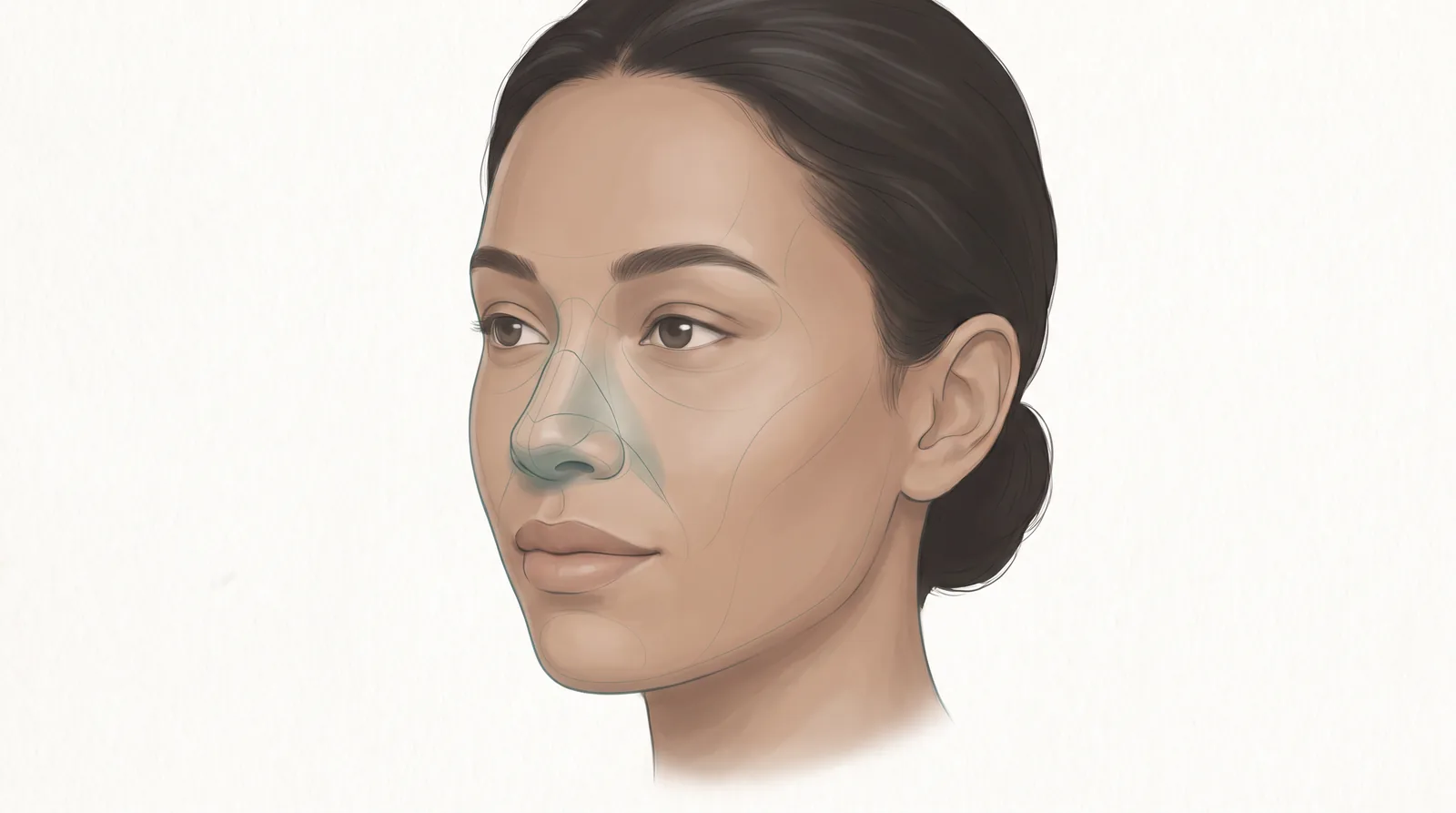
Swelling is an expected biological response after surgery, and it does not follow a perfectly straight line. It can look more noticeable in the morning or fluctuate from day to day. Bruising commonly improves earlier than deeper swelling. The nose may look wider, firmer or uneven during early healing; this is not a reliable time to judge the final contour.
Many people notice that the initial swelling settles substantially over the first weeks, but deeper swelling continues to resolve gradually. Cleveland Clinic describes swelling for roughly four to six weeks, a slower reduction through three months, and possible minimal residual swelling up to a year; ASPS similarly notes that refinement may take up to a year. These are broad reference points, not promises. Patients with thicker skin, more extensive structural work or individual healing differences may have a different course.
Helpful habits are simple: protect the nose from bumps, sleep with the head elevated if advised, attend follow-ups and avoid high heat or unapproved exertion when these worsen swelling. Cool compresses should be used only as instructed—typically on the cheeks or beneath the eyes rather than pressing directly on the nose. Avoid comparing your recovery with social-media timelines or another patient’s photographs.
Returning to work, exercise and everyday life
A desk-based return may be possible for some people after approximately one to two weeks, depending on how they feel and the visible bruising or splint removal schedule. This is not a clearance for everyone. A job involving lifting, dust, heat, travel, close contact or a risk of facial impact may need more time or adjustments.
A conservative progression is usually safest:
- **Early phase:** gentle walking and ordinary low-effort movement only if cleared; no gym sessions, running, heavy lifting or contact risk.
- **First few weeks:** increase routine activity only after the surgeon reviews healing. Stanford advises minimising physical activity for two weeks, as strenuous activity can increase swelling or bleeding.
- **Around four to six weeks:** some patients may be cleared for light exercise, while heavy lifting is often delayed during this period; Cleveland Clinic gives this as a general range, not a personal prescription.
- **Contact sports, swimming and impact risk:** ask specifically. The timing depends on bone work, stability, wound healing and the sport. Protective decisions should be made by the operating surgeon.
Travel plans should also be discussed in advance, especially if follow-up, swelling management or access to medical care could be affected. A precise plan is particularly useful for patients who live outside Dubai or anticipate frequent travel.
When to contact the clinic urgently
Contact the surgical team promptly for significant or uncontrolled bleeding, worsening rather than improving severe pain, fever, yellow or pus-like discharge, increasing redness or warmth, a wound opening, or breathing difficulty. Seek emergency care for severe trouble breathing, fainting, chest pain or shortness of breath. [Alberta Health Services] and [Cleveland Clinic] list these kinds of warning signs. When in doubt, it is safer to ask the clinic than to self-treat.
A measured next step
If you are considering **Rhinoplasty**, schedule a consultation with our Dubai clinic. The surgeon can assess nasal structure, breathing concerns, medical history, lifestyle and recovery support, then explain whether the procedure is suitable and what aftercare plan is appropriate for you. Outcomes and recovery times vary; suitability is determined only after an in-person clinical evaluation.
A considered next step
For a personal assessment, visit the rhinoplasty procedure page and request a consultation with the medical team. Suitability, options and risks can only be determined after an in-person evaluation.
Frequently Asked Questions
How long is a rhinoplasty splint usually worn?
An external splint is commonly removed at a follow-up visit around one week, although the exact timing depends on the operation and your surgeon’s plan. Do not remove or adjust it yourself.
Is swelling after rhinoplasty normal?
Yes, swelling and some bruising are expected during healing. Initial swelling often improves over weeks, while subtle refinement can continue for months and sometimes up to a year. Contact the clinic if swelling is accompanied by warning signs such as fever, worsening severe pain or pus-like discharge.
When can I exercise after rhinoplasty?
The date is individual. Gentle walking may be appropriate early if your surgeon agrees, while strenuous exercise and heavy lifting are commonly postponed. Your surgeon should clear each progression based on healing and the activity’s impact risk.
When should I call my surgeon after rhinoplasty?
Contact the clinic promptly for significant bleeding, breathing difficulty, fever, worsening severe pain, increasing redness or warmth, a wound opening, or yellow/pus-like drainage. Seek emergency care for severe breathing difficulty, fainting, chest pain or shortness of breath.