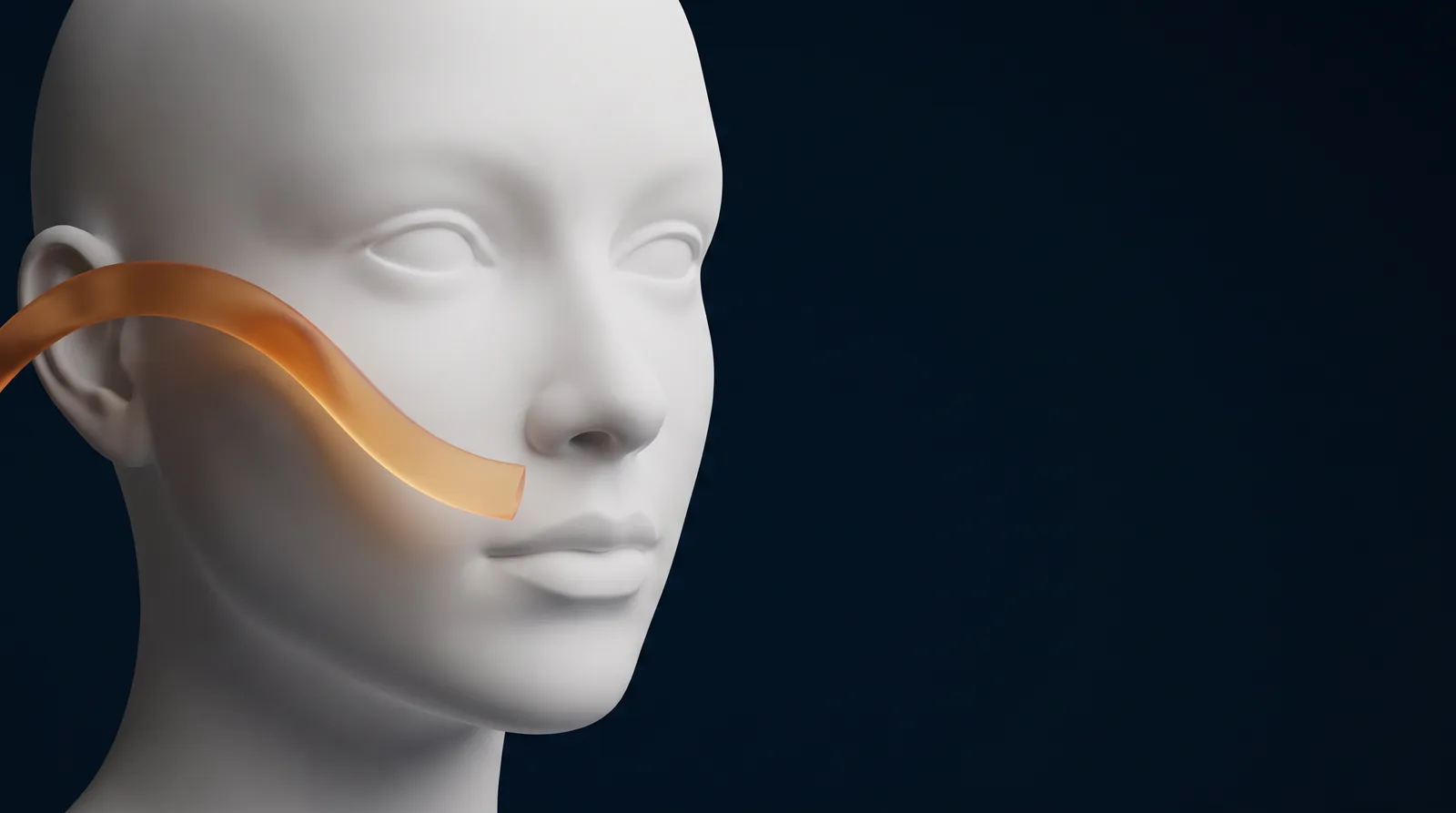
A question about a “midface lift versus a facelift” often starts with a mirror observation: the cheeks seem lower, the folds beside the mouth look deeper, the jawline has softened, or the face appears tired despite adequate sleep. These observations may sit close together, but they do not necessarily describe the same anatomical area or the same surgical conversation. A useful consultation begins by locating the concern before naming a procedure.
The midface is broadly the central cheek region beneath the eyes and above the mouth. A facelift is a broader term, not one single operation. Depending on the technique and the plan, it may address selected portions of the cheeks, lower face, jawline, and sometimes the neck. This distinction matters because a procedure can be technically sound yet poorly matched to the main concern. The purpose of an assessment is not to choose the most extensive option; it is to understand which structures are contributing to the change someone sees.
Start with a facial map, not a procedure name
Facial ageing is not confined to one horizontal line. In the midface, changes can involve descent of cheek soft tissue, changes in the distribution of facial volume, skin quality, and the transition between the lower eyelid and cheek. A person may describe this as a flatter upper cheek, a heavier lower cheek, a more visible fold from the nose toward the mouth, or a shadow that was not previously noticeable. The same description can arise from more than one combination of anatomy, skin, and light.
The lower face has a different set of landmarks. These include the jawline, the area in front of the jowl, the angle of the jaw, and the neck. Laxity there may be experienced as loss of definition, loose skin, fullness under the chin, or a change in profile. Although the cheek and jawline affect one another visually, treating a cheek concern does not automatically address jowling or neck laxity. Equally, work directed mainly at the lower face may not fully change a concern centred below the eyes or around the upper cheeks.
An in-person assessment looks beyond one front-facing image. It may consider the face at rest, in expression, and from the side, as well as the relationship among the eyelids, cheek prominence, folds, jawline, and neck. Skin thickness, elasticity, pre-existing asymmetry, prior procedures, weight change, medical history, and healing factors all influence the discussion. This broader view is why an online label or a single photograph is not enough to decide what a person needs.
When the midface is the main area of concern
A midface lift, sometimes called a cheek lift, is designed to discuss the cheek region rather than the whole lower face and neck. In suitable circumstances, the surgical conversation may focus on supporting or repositioning descended cheek soft tissues and improving the continuity of the upper-cheek contour. It may be relevant when the dominant concern is a lower-positioned cheek, a change in the cheek-to-lower-eyelid transition, or folds that appear related to cheek descent.
This does not mean that every hollow or line beneath the eyes is a midface-lift issue. Under-eye appearance may reflect skin quality, lower-eyelid laxity, orbital fat, pigment, facial volume, tear-trough anatomy, or a combination of these factors. Nor does lifting tissue necessarily replace missing volume or improve fine creasing in the skin. A careful discussion separates a contour concern from a surface concern and distinguishes a lower-eyelid issue from a cheek issue. In some situations, a midface component may be discussed alongside eyelid surgery or another planned facial procedure; in others, combining procedures is neither necessary nor appropriate.
The term “midface lift” does not reliably describe one incision, one plane of surgery, or one result. Surgeons may use different approaches according to anatomy and objectives. For that reason, it is more helpful to ask which area is being treated, what will be moved or supported, and what remains outside the scope of the plan than to rely on a label such as “mini,” “micro,” or “midface.”
When a facelift discussion becomes broader
A facelift, also called rhytidectomy, is usually discussed when visible changes extend beyond the central cheek. Its scope can range from a more limited lower-face approach to a more comprehensive plan involving the cheeks, jawline, and neck. The plan may involve repositioning deeper supporting tissues, managing selected fat, and redraping skin without simply pulling it tight. The exact elements vary substantially from person to person.
A broader facelift discussion may be appropriate when the main issue includes jowls, loss of jawline definition, loose skin along the lower face, or neck laxity in addition to cheek changes. If the concern is mostly below the mouth and along the jaw, an isolated cheek-focused procedure may leave the main complaint largely unchanged. Conversely, a person who is concerned primarily with upper-cheek position may not need a plan designed around the neck. “More extensive” is not a synonym for “better”; it is only a description of area and surgical scope.
There is overlap. Some facelift techniques include meaningful midface work, and a patient may have both midface and lower-face features that warrant discussion. A surgeon may therefore describe the plan in layers and regions rather than as a simple choice between two disconnected operations. Ask whether the intended improvement is expected in the cheek, the fold beside the mouth, the jawline, the neck, or several of these areas. Asking what is deliberately not being treated is equally useful.
Matching the discussion to what you see day to day
Bring specific observations to a consultation rather than a request for a named technique. For example: “My cheeks look lower in three-quarter view,” “the shadow beside my mouth concerns me more than my jawline,” or “my jawline and neck have changed, while my cheeks still look like me.” These phrases help direct the examination toward the area that matters to you.
It is also useful to discuss what has changed and what has not. A concern that varies mainly with dehydration, weight fluctuation, sleep, or lighting may need a different conversation from a stable structural change. Previous filler, threads, facial surgery, skin treatments, trauma, dental work, and illnesses can affect planning. Mention all medicines, supplements, nicotine exposure, allergies, prior anaesthetic experiences, and relevant medical conditions. These are safety details, not administrative formalities.
Natural-looking goals are usually best expressed as proportions and priorities, not as a request to copy another face or return to a particular age. A surgeon can explain whether the visible issue appears related chiefly to descent, skin excess, volume change, lower-eyelid anatomy, or lower-face laxity. They can also explain the trade-offs of different operative extents and whether a staged approach, an adjunctive procedure, or no surgery is the more sensible direction. A responsible discussion makes room for uncertainty when the expected contribution of an intervention is limited.
Treatment limits and safety considerations
Neither a midface lift nor a facelift stops facial ageing, changes a person’s fundamental identity, or corrects every feature that can make the face look tired. Surgery aimed at tissue position is not a direct treatment for fine lines, uneven pigment, sun-related texture changes, or every type of under-eye shadow. Results also vary with anatomy, skin quality, healing, lifestyle, technique, and the extent of the procedure. No surgeon can ethically promise symmetry, a particular appearance, or a fixed duration of benefit.
Like all operations, these procedures carry potential risks. Depending on the approach, these can include bleeding or a collection of blood or fluid, infection, delayed or problematic healing, scarring, changes in sensation, hair changes near an incision, prolonged swelling, asymmetry, and injury to facial nerves or nearby structures. Anaesthesia also has risks. Smoking or nicotine use, certain medicines or supplements, conditions that affect circulation or healing, and a history of difficult scarring may alter risk or suitability. These factors require individual review rather than a general online answer.
Choose a properly qualified surgeon who performs facial procedures in an appropriately licensed setting, and make sure the consultation includes a medical assessment, a clear explanation of incision placement and anticipated limits, and time to discuss alternatives. Follow all pre- and post-operative instructions from the treating team. After any facial operation, urgent contact with the surgical team is important for unexpected bleeding, rapidly increasing swelling, severe pain, fever, breathing difficulty, or concerning wound changes.
Frequently Asked Questions ### Can a midface lift improve the folds beside the nose and mouth?
It may be part of the discussion when those folds are influenced by descent of cheek tissue. However, folds are shaped by facial movement, skin, volume, and individual anatomy as well as cheek position. An examination is needed to determine whether a cheek-focused operation is likely to address the concern and to clarify what degree of change is realistic.
Is a midface lift the same as a mini facelift?
Not necessarily. These terms are used inconsistently. “Midface” should refer to the central cheek area, while “mini” often refers to a more limited operation, but neither name guarantees a specific technique or target. Ask the surgeon to identify the facial regions and tissue layers included in the proposed plan.
If I have cheek descent and jowls, must I choose only one procedure?
No. The assessment can consider both areas, but it does not automatically mean that both should be treated at the same time. The decision depends on the relative importance of each concern, anatomy, medical suitability, recovery considerations, and the balance of benefits and risks. A tailored plan may be narrower, broader, combined, staged, or non-surgical.
**Medical notice:** This article provides general education and is not a diagnosis, surgical recommendation, or substitute for a personal medical consultation. A qualified clinician must assess your health, facial anatomy, medications, goals, and risks before any treatment decision.
If you would like to discuss a facial concern by area rather than by trend or procedure name, explore our facelift consultation information.