Introduction
A facelift changes tissue position through carefully planned access points. Those access points become scars, so the conversation should begin before surgery—not after dressings are removed. A well-planned incision is intended to sit within hair-bearing areas or natural curves around the ear where it may be less conspicuous. It is not invisible, and no clinician can promise a particular scar quality.
The most useful question is not simply, ‘Where will the scar be?’ It is: ‘Why is that route appropriate for my facial anatomy, hairline, amount of skin laxity and planned correction?’ This article explains the logic behind incision and hairline planning, what a scar can realistically do during healing, and which questions help make consent more informed. It does not replace an in-person examination or personal postoperative instructions.
The anatomy behind an incision route
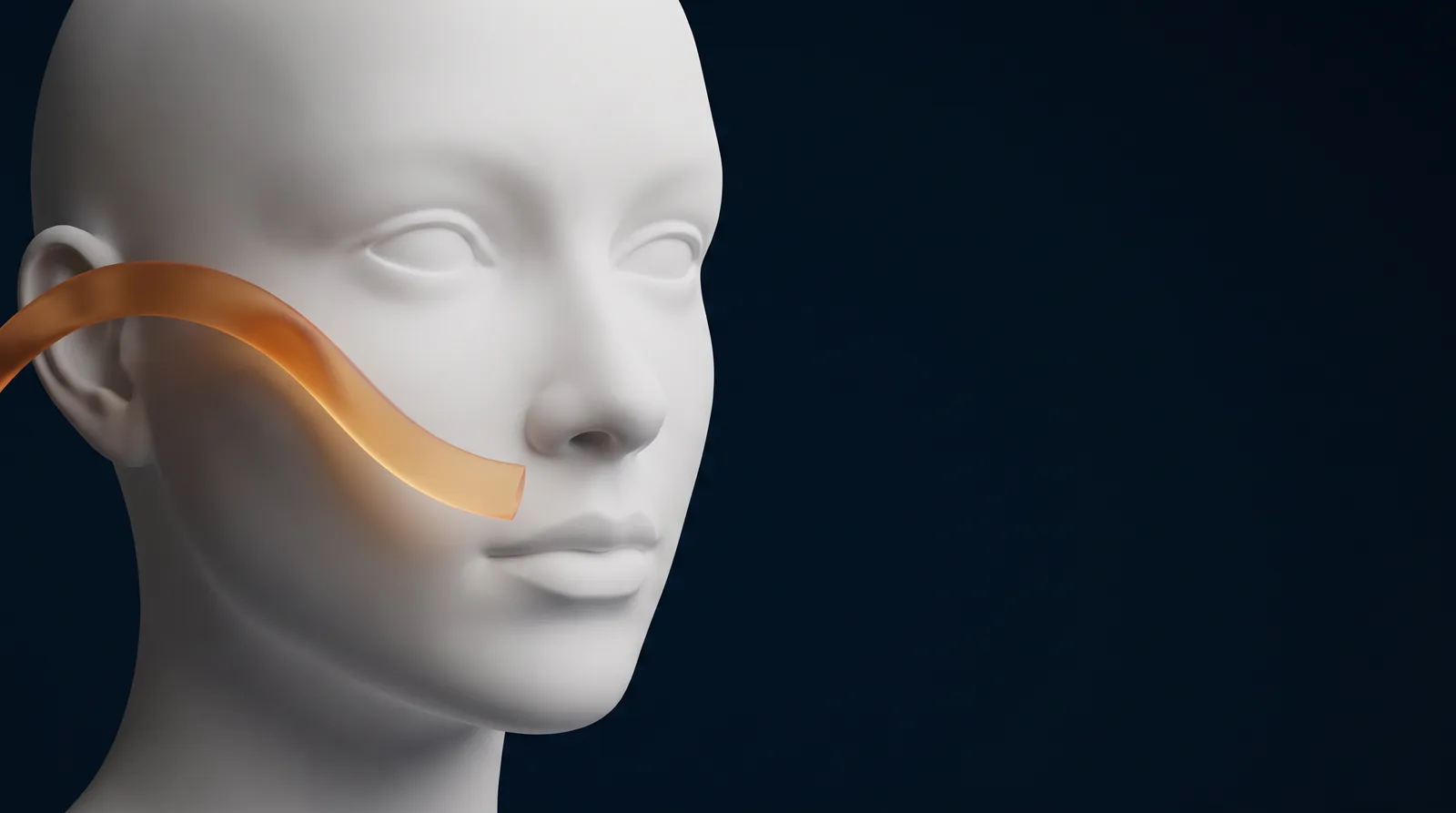
The temple, sideburn, front of the ear, earlobe, crease behind the ear and lower scalp form a connected visual and anatomical corridor. A traditional facelift incision may begin in the temple hairline, travel around the ear, and continue into the lower scalp. A shorter route may be considered when the planned treatment is more limited. Some procedures also need access below the chin or behind the ear, depending on the area being addressed.
These routes are not interchangeable templates. The surgeon needs sufficient access to reposition deeper facial tissues and redrape skin without placing excessive pull on the closure. A very short incision is not automatically the better incision if it restricts safe access or requires more tension at a visible point. Conversely, a longer route does not mean that every part will be equally visible. Placement, direction, skin quality and the way tissue rests around the ear all matter.
The ear deserves particular attention because small changes can be noticeable there. The natural folds in front of and behind the ear offer potential camouflage, but they also create a complex three-dimensional boundary. The goal is to respect these contours rather than flatten, pull or distort them. In people with facial hair, beard-bearing skin and future shaving patterns also deserve discussion.
Hairline and sideburn planning: preserving a recognisable frame
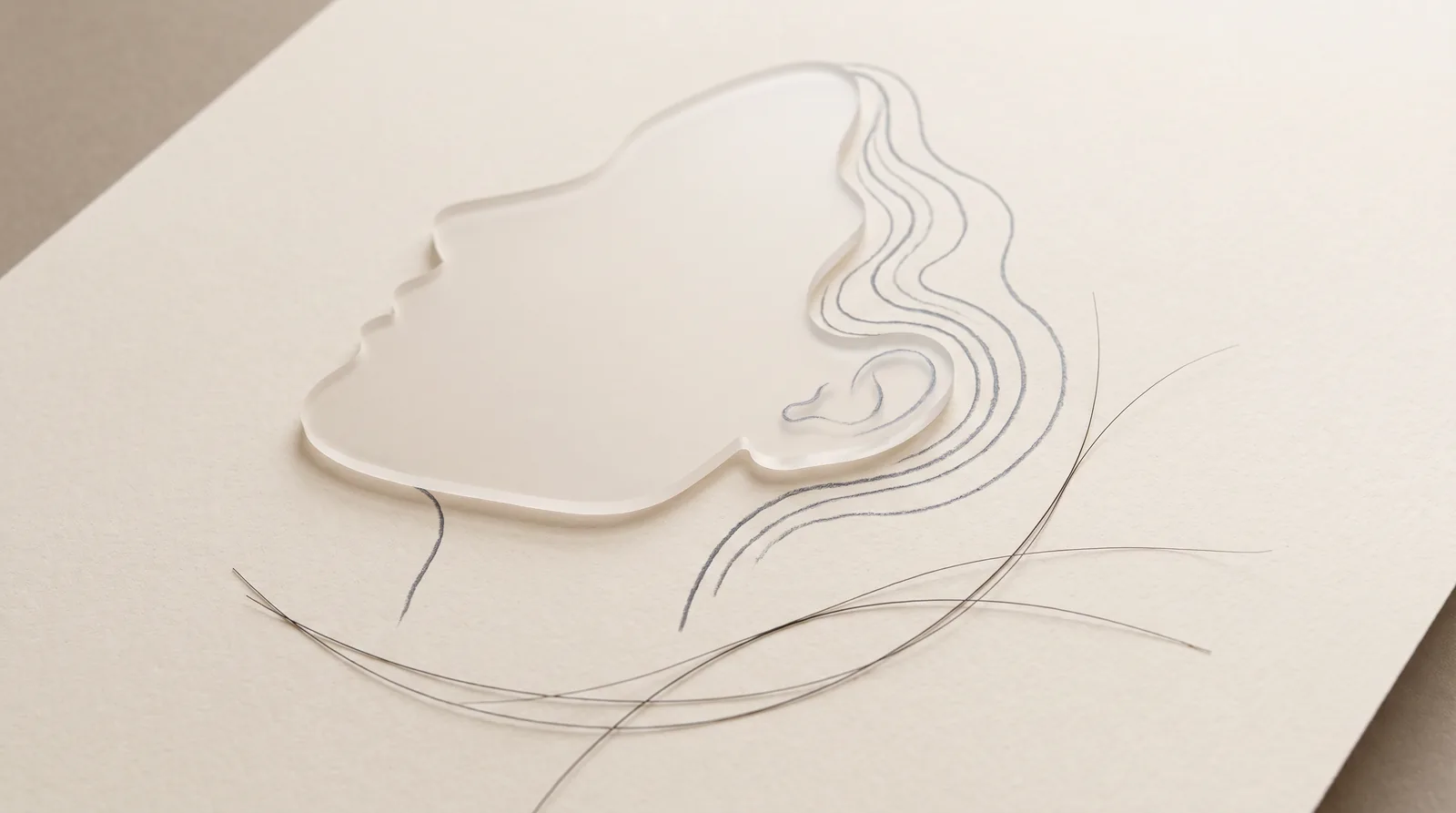
Hair is more than coverage for a scar. The temple hairline and sideburn help frame the face, so their position can affect how recognisable and balanced a result appears. During planning, a surgeon may assess temple density, sideburn height and shape, the direction in which hair grows, existing recession, and whether the patient commonly wears hair up or short. These details help identify which portions of an incision may be exposed in everyday life.
A person with a high or receding temple hairline may have different priorities from someone with dense hair and a low hairline. Moving hair-bearing skin in an unfavourable direction can alter the apparent height of the sideburn or temple. For this reason, hairline preservation is not solved by one universal incision name. It is a balance between placing the scar discreetly and avoiding an unnatural shift in the hair-bearing border.
The condition of the scalp and hair also belongs in the assessment. Previous scars, hair transplantation, traction-related thinning, dermatological conditions, recent colour treatments and a history of hair shedding can be relevant. Temporary or lasting hair loss near an incision is a recognised risk, not a sign that planning has failed in every case. Raising the issue beforehand allows a candid discussion about baseline hair, risk factors and what can or cannot be predicted.
A helpful consultation includes looking at the face with the hair worn in familiar styles. Bring photographs that show your usual parting, hair-up styles or short cuts if these are important to you. The purpose is not to choose a line from a picture; it is to give the surgical team practical context for discussing exposure and trade-offs.
Scar quality is biological, not only technical
Every incision heals by forming scar tissue. In the early stage, an incision can look more pink or red, feel firm, itch or tingle, and have altered sensation nearby. These features can change as healing progresses. A mature scar often becomes flatter and less colourful, but its final character varies. Some people are more prone to a wider, thicker or persistently noticeable scar. Skin tone, skin tension, inflammation, sun exposure, smoking, medical conditions, medications, genetics and wound complications may all influence the course.
Technique matters. Gentle handling of tissues, an accurate closure and minimising unnecessary tension are important principles. They are not a guarantee. Even a thoughtfully placed incision can heal differently from one side to the other or differently from scars a person has had elsewhere. A scar hidden by hair may also become visible when hair is wet, parted differently or worn up. Honest planning accounts for those situations instead of presenting camouflage as permanence.
Scar assessment should also distinguish colour, texture, width, contour and symptoms. A fine line can be noticeable because of colour early on; a pale line may be visible because of texture; a scar can be well positioned but still draw attention if a nearby hairline changes. This is why ‘Will I scar?’ has only one truthful answer: yes, but the aim is to position and manage the incision thoughtfully while accepting that biology remains part of the outcome.
Healing and aftercare: realistic, individual and supervised
Healing is a process rather than a date on a calendar. Bruising, swelling, numbness and changes in how the incision looks can make the early appearance a poor indicator of the longer-term result. The surgical team should explain what is expected for the chosen procedure, when dressings or sutures may be reviewed, and how to contact them if a concern arises. Follow their specific instructions about cleansing, hair washing, activity, medicines and any scar products; online routines are not a substitute for that plan.
In general, avoid picking at crusts or scabs and protect healing incisions from sun exposure in line with your clinician’s advice. Do not start silicone products, massage, makeup near a wound, hair colouring or other treatments simply because a timeline online suggests it. These choices depend on whether the skin is fully closed, how it is healing and what was done during surgery. Smoking and nicotine exposure can impair healing, so disclose all forms of nicotine use and ask the treating team for guidance before surgery.
Contact the surgical team promptly if there is increasing rather than settling pain, marked one-sided swelling, spreading redness, discharge, an unpleasant odour, fever, a sudden change in facial movement, shortness of breath or chest pain. These symptoms need clinical assessment; they should not be judged from photographs or managed with a generic online recommendation.
Treatment limits and safety
A facelift can improve selected signs of tissue descent and loose skin, but it cannot erase every fine line, repair sun-related skin changes or stop future ageing. Scar placement is designed around the planned treatment area, not around a promise of an invisible mark. Revision procedures, laser treatments or other scar interventions may sometimes be discussed later, but no one should assume they will be needed or suitable.
Facelift surgery also carries risks including bleeding or a collection of blood beneath the skin, infection, wound-healing problems, unfavourable scarring, asymmetry, changes in sensation, nerve injury, hair loss near the incision, anaesthesia-related complications and, rarely, skin loss. Certain health conditions, medicines or supplements, and smoking can increase risk. A proper evaluation includes medical history, medication review, physical examination and a discussion of alternatives as well as benefits.
Questions to take to the consultation
Ask the surgeon to point out the proposed incision zones on your own face and scalp, then explain what each segment is intended to address. Ask how your temple hairline and sideburn position influence the plan, whether an existing scar or hair thinning changes the discussion, and which part may be visible with your usual hairstyle. It is also reasonable to ask about the team’s wound-review process, warning signs that should trigger a call and how they approach a scar that remains bothersome after it has had appropriate time to mature.
These questions are not a request for perfection. They create a clearer shared understanding of priorities: access and safety, facial proportions, hairline preservation, scar location and the limits of prediction.
Frequently Asked Questions ### Can a facelift scar be completely hidden?
No. Incisions create scars. Surgeons aim to place them in hair-bearing areas or natural ear and facial contours when appropriate, but visibility depends on anatomy, hairstyle, lighting, skin healing and scar biology. Hair worn up or very short can reveal areas that are covered in other settings.
Does a higher hairline mean I cannot have a facelift?
Not necessarily. A high or receding hairline is an important planning factor rather than an automatic exclusion. The surgeon should assess the existing hair-bearing border, skin laxity, intended correction and your priorities before explaining which trade-offs apply in your case.
When should a scar concern be reviewed?
Follow the review schedule given by your surgical team and contact them sooner for increasing pain, redness, swelling, discharge, odour, wound separation or any symptom that concerns you. For cosmetic changes that are not urgent, a clinician can advise when an examination is most informative and whether observation or treatment is appropriate.
**Medical notice:** This article provides general education and is not a diagnosis, a treatment plan or personal postoperative advice. Decisions about facelift surgery, incision placement and scar care require assessment by a suitably qualified surgeon.
To discuss facial anatomy, hairline priorities and the realistic limits of facelift surgery in a personalised consultation, visit Facelift.