Liposuction is often discussed as though it freezes a body shape in place. A more useful view is that it changes the contour of selected areas at one point in time. The body, however, continues to respond to food intake, activity, sleep, stress, hormonal transitions, medicines, illness and ordinary ageing. That is why a thoughtful conversation about liposuction should include what may happen if weight changes later, not only what happens in the operating room.
The procedure removes fat from targeted deposits beneath the skin. It is not designed to treat obesity, replace weight-management care or create a guarantee about a future silhouette. Many people seek it because a local fullness has remained despite their usual healthy habits. In that setting, a goal such as smoother proportion in a defined area may be more realistic than a goal based on a particular number on the scale or a permanently unchanged body.
If you are considering liposuction in Dubai, it can help to separate two questions. The first is whether a current concern is a localized contour issue that surgery might address. The second is whether your present weight and lifestyle feel reasonably sustainable for you. Neither question has a one-size-fits-all answer. A qualified surgeon can assess the area, skin quality, health history and expectations, while a clinician involved in weight or metabolic care can advise when weight change has a health-related cause.
What Liposuction Changes—and What It Does Not
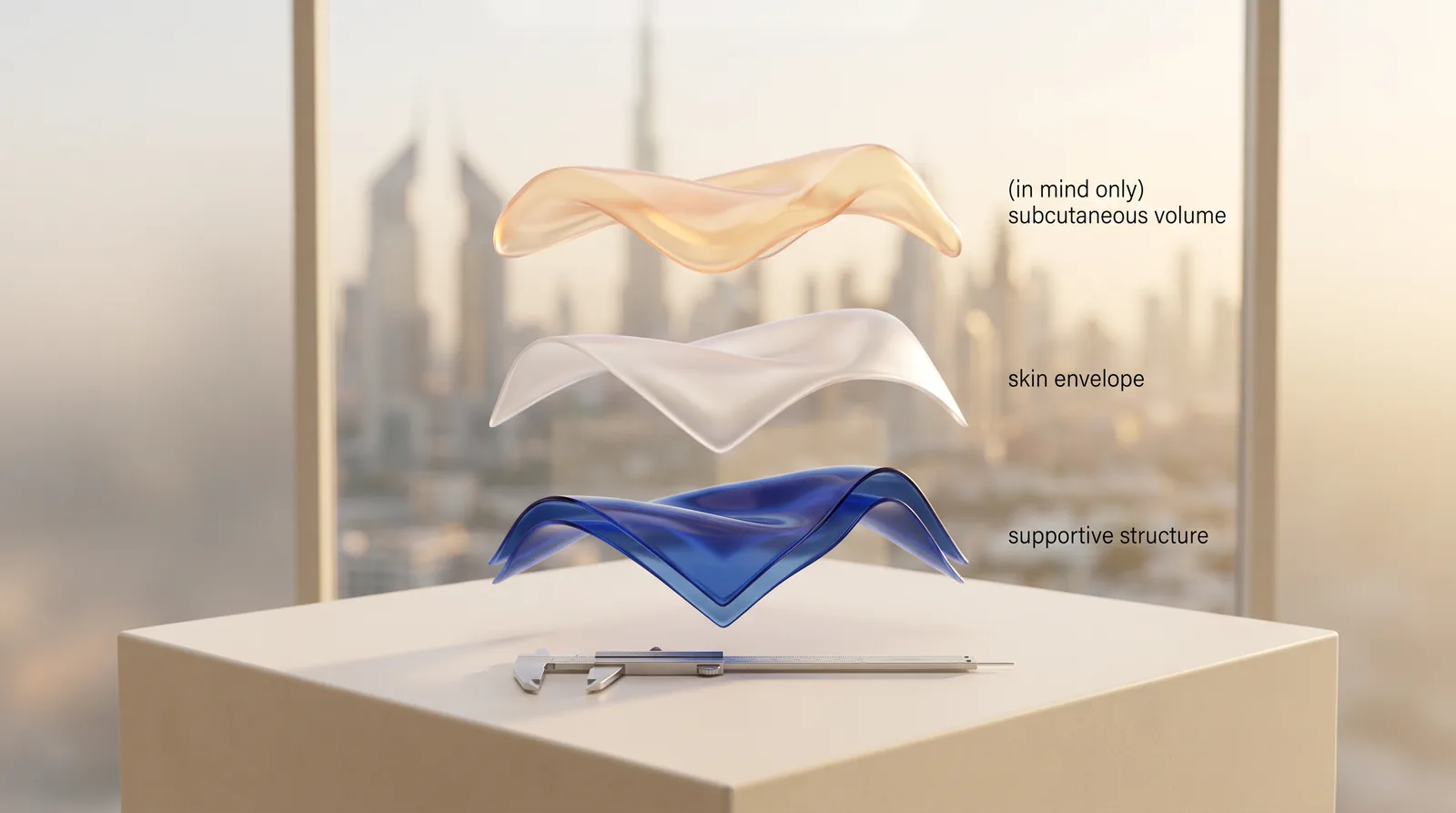
Liposuction reduces the number of fat cells in the treated area. That is different from changing the body’s overall tendency to gain or lose weight. Remaining fat cells can still enlarge when the body stores more energy, and fat can accumulate in areas that were not treated. The way this looks varies from person to person; it is not possible to predict precisely where a particular person’s body will change.
This distinction matters because a stable contour is not the same thing as a permanent body size. Someone may remain pleased with an area while noticing a broader change elsewhere. Another person may see a treated area become less distinct after a larger weight increase. Conversely, substantial weight loss after surgery can change the balance between the treated area, nearby areas and the quality of the skin. These are possibilities rather than promises or predictions.
The scale is also an incomplete measure of a contour result. It does not show swelling, body composition, posture, muscle changes or how clothing fits. During healing, temporary swelling and fluid shifts can make an area look different from day to day. It is wise not to use a mirror or a single weigh-in as proof that a result has been gained or lost. If a change feels concerning, the operating team is the appropriate source of personalised assessment.
Liposuction also does not tighten every type of loose skin, erase stretch marks or treat cellulite. When skin is firm and elastic, it may adapt more smoothly to a reduced volume. When there is marked laxity, prior stretching or reduced elasticity, the surface may not redrape in the way a person hopes. These features should be part of preoperative planning, because removing more fat is not automatically the answer to a contour concern.
How Weight Gain and Weight Loss May Affect Contour
Weight gain after liposuction does not mean the procedure has “failed,” but it can alter the visual balance that surgery created. Fat storage is influenced by individual biology, age, hormones, health conditions and lifestyle. A treated zone has fewer fat cells than before, yet it is not isolated from the rest of the body. Changes may appear in untreated zones, in remaining tissue within the treated zone, or in both. The amount and pattern cannot be guaranteed.
For this reason, maintaining a weight range that is practical and medically appropriate for you is generally more useful than pursuing repeated rapid changes. Extreme restriction, unsupervised supplements, dehydration tactics and punishing exercise plans can carry health risks and are not a reliable way to preserve a contour. A sustainable pattern of eating, regular movement suited to your health, adequate sleep and support for stress can serve overall wellbeing as well as body-composition goals. Individual advice belongs with the clinician who knows your medical history.
Weight loss can affect contour too. If a person loses a significant amount after liposuction, decreased volume and changes in skin support may reveal laxity that was not apparent at the original size. This does not necessarily mean something went wrong. It means that surgery addressed the tissues and goals present at the time of treatment, while the body has continued to change. A new concern should be evaluated on its own terms rather than assumed to require another procedure.
Pregnancy, menopause, recovery from illness, new medicines and shifts in activity can also change weight or body composition. These are normal life contexts, not personal failures. Sharing foreseeable plans or health changes before surgery helps a surgeon place a contour goal in the right context. After surgery, discussing a meaningful change with the care team can be more informative than comparing yourself with an old photograph or someone else’s outcome.
Preserving Context: Recovery, Skin and Expectations
Early appearance is not the same as the settled appearance. Bruising, swelling, tenderness, numbness and changes in sensation can occur after liposuction. The pace at which these features improve differs by technique, the extent of treatment, the area treated and the individual. Follow the surgeon’s specific instructions about wound care, compression, movement, medicines and appointments rather than borrowing a recovery plan from social media or a friend.
Follow-up is not simply a formality. It gives the clinical team an opportunity to check healing, answer questions about an evolving contour and identify problems that may need attention. Bringing clear observations can help: when you first noticed a change, whether it is stable or progressing, whether it is associated with pain or fluid, and whether there has been an overall weight or health change. This is more useful than trying to diagnose a contour irregularity at home.
Expectations deserve the same care as incisions. Photos, filters and “before-and-after” marketing can make normal variation disappear. A responsible consultation should explore what bothers you, what a procedure can reasonably address, what it cannot change and what alternatives may be appropriate. It should also leave room for the possibility that the result may differ from your imagined ideal. No surgeon can ethically promise a specific measurement, a perfectly symmetrical outline or an unchanged result through every future weight transition.
A helpful personal aim is not to police every fluctuation. It is to protect recovery, attend follow-up and make health decisions that can be sustained. If appearance concerns are causing distress, rigid food rules, compulsive exercise or avoidance of daily life, raise this openly with a healthcare professional. Emotional wellbeing is relevant to cosmetic decision-making and deserves the same respect as physical safety.
Limits, Safety and When to Contact a Clinician
Liposuction is surgery and has limitations and risks. Possible complications include infection, bleeding, fluid collections, changes in sensation, scarring and contour irregularities; uncommon but serious complications can occur. The safety profile is affected by the amount and areas treated, the technique, other procedures performed at the same time and a person’s health. A proper assessment should cover medical conditions, medicines and supplements, smoking or nicotine use, prior procedures, skin quality and realistic goals.
Contact the treating clinic promptly for severe or worsening pain, increasing swelling, drainage or bleeding, fever, a wound concern, or symptoms that are unexpected for you. Chest pain, shortness of breath, fainting or other acute symptoms require urgent medical assessment. This article cannot determine whether a symptom is routine healing or a complication. Do not delay care while waiting for a contour to “settle.”
Frequently Asked Questions ### Can fat come back after liposuction?
Liposuction removes fat cells from the treated area, but it does not prevent future weight gain. Remaining fat cells can enlarge, and fat may accumulate in untreated areas. How any change appears is individual, so no specific long-term contour can be guaranteed.
If my weight changes, will the treated area change first?
There is no reliable rule that applies to everyone. Genetics, hormones, the areas treated, skin characteristics and the size of the weight change can all influence appearance. A surgeon can explain the anatomy involved in your own treatment, but cannot map future fat storage with certainty.
Is a new bulge or uneven area always caused by weight gain?
No. Healing changes, swelling, skin quality, local scar tissue and overall body changes may all affect what you see. A new, persistent or worrying change should be reviewed by the treating team rather than self-diagnosed from photos or the scale.
**Medical note:** This article provides general education and is not a diagnosis, a treatment plan or a substitute for an in-person assessment. Your surgeon and other qualified healthcare professionals should guide decisions before and after liposuction.
To discuss localized fat concerns, realistic contour goals and the questions that matter for your health, visit our liposuction procedure page.