Breast implants are medical devices that remain part of a person’s health history long after surgery. Whether implants were placed for cosmetic augmentation or reconstruction, long-term care is not about waiting for a problem or assuming that a device has a fixed expiry date. It is about keeping useful records, continuing breast-health care, noticing meaningful changes, and having imaging discussions that answer a clear clinical question.
A well-organised follow-up plan can reduce uncertainty without turning daily life into surveillance. It should take account of implant fill and surface, the reason for the original surgery, previous procedures, symptoms, family or personal breast-health history, and the imaging already available. This is especially helpful when care changes hands or when a patient moves between clinics in Dubai or elsewhere.
Monitoring is a plan, not a countdown
Breast implants are not lifetime devices. The likelihood of certain complications can rise the longer a device is in place, but no scan or calendar can predict what will happen for one individual. Some people may never need further surgery, while others may need assessment or another procedure for reasons such as capsular contracture, rupture, changes in preference, reconstruction needs, or another breast condition. The important point is that the age of an implant alone does not dictate a decision.
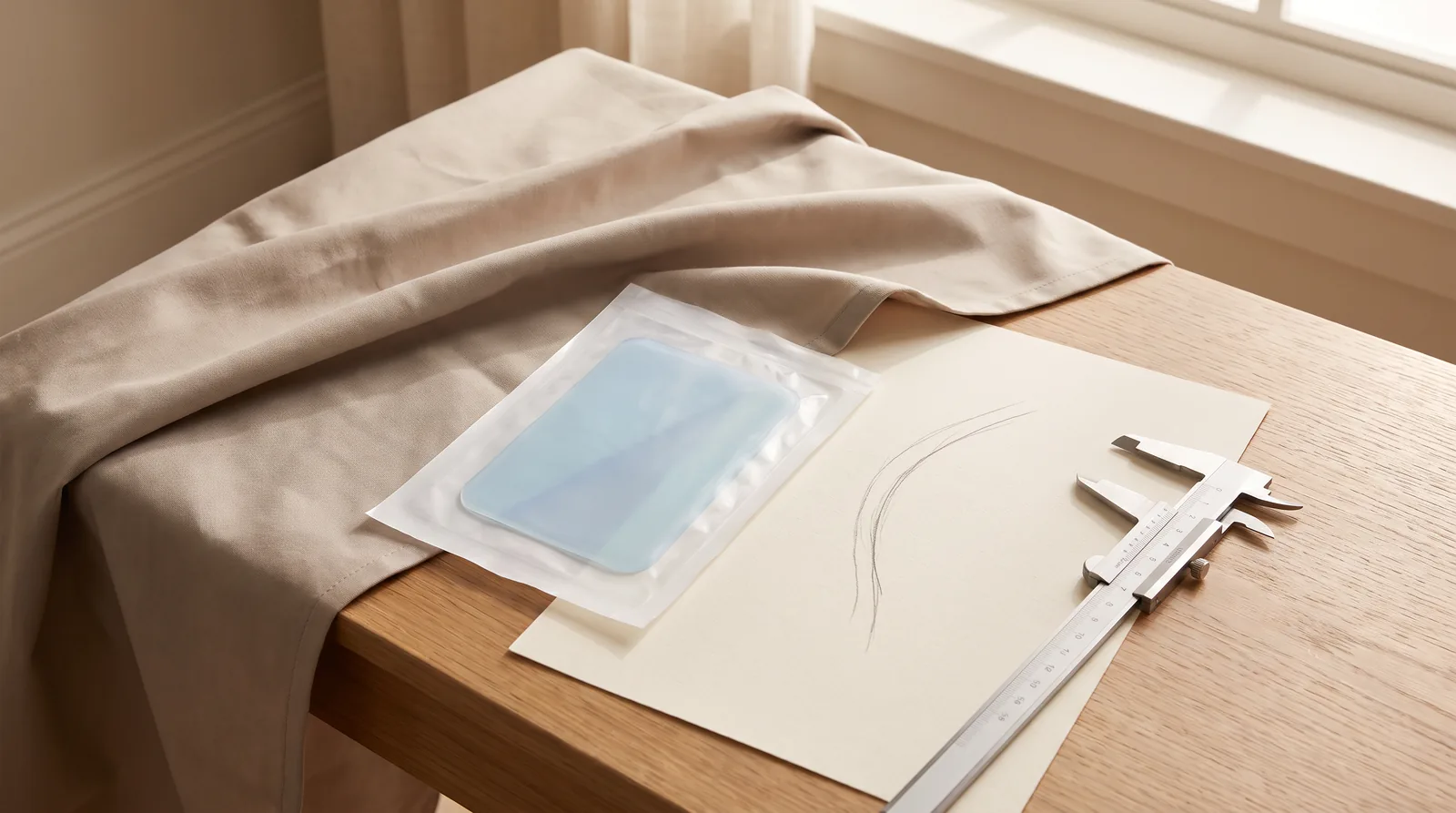
A useful starting point is an implant record. Keep the patient device card or operative information if it is available: manufacturer, model, fill, surface, size, placement, surgery date, and the name of the surgeon or facility. Add copies of imaging reports and major clinical notes. These details help a specialist or radiologist interpret a new concern and compare it with the original plan. If records are missing, a consultation can still begin with a history, examination, and appropriately selected imaging; missing paperwork should not prevent someone from seeking care.
Follow-up has two parallel tracks. One is implant-focused: asking whether the device and surrounding capsule appear stable and whether a new symptom needs explanation. The other is breast health: continuing age- and risk-appropriate screening and clinical assessment. These tracks overlap, but they are not interchangeable. A scan chosen to assess implant integrity does not automatically replace screening for breast tissue, and a routine breast-cancer screening examination is not designed to answer every implant question.
What each imaging conversation is designed to answer
Imaging is most helpful when the referral states the purpose. A patient who feels well and wants a planned silicone-implant integrity check has a different question from someone with new one-sided swelling, a palpable lump, a sudden change in contour, or enlarged underarm nodes. The radiology team can then select and interpret the examination in context.
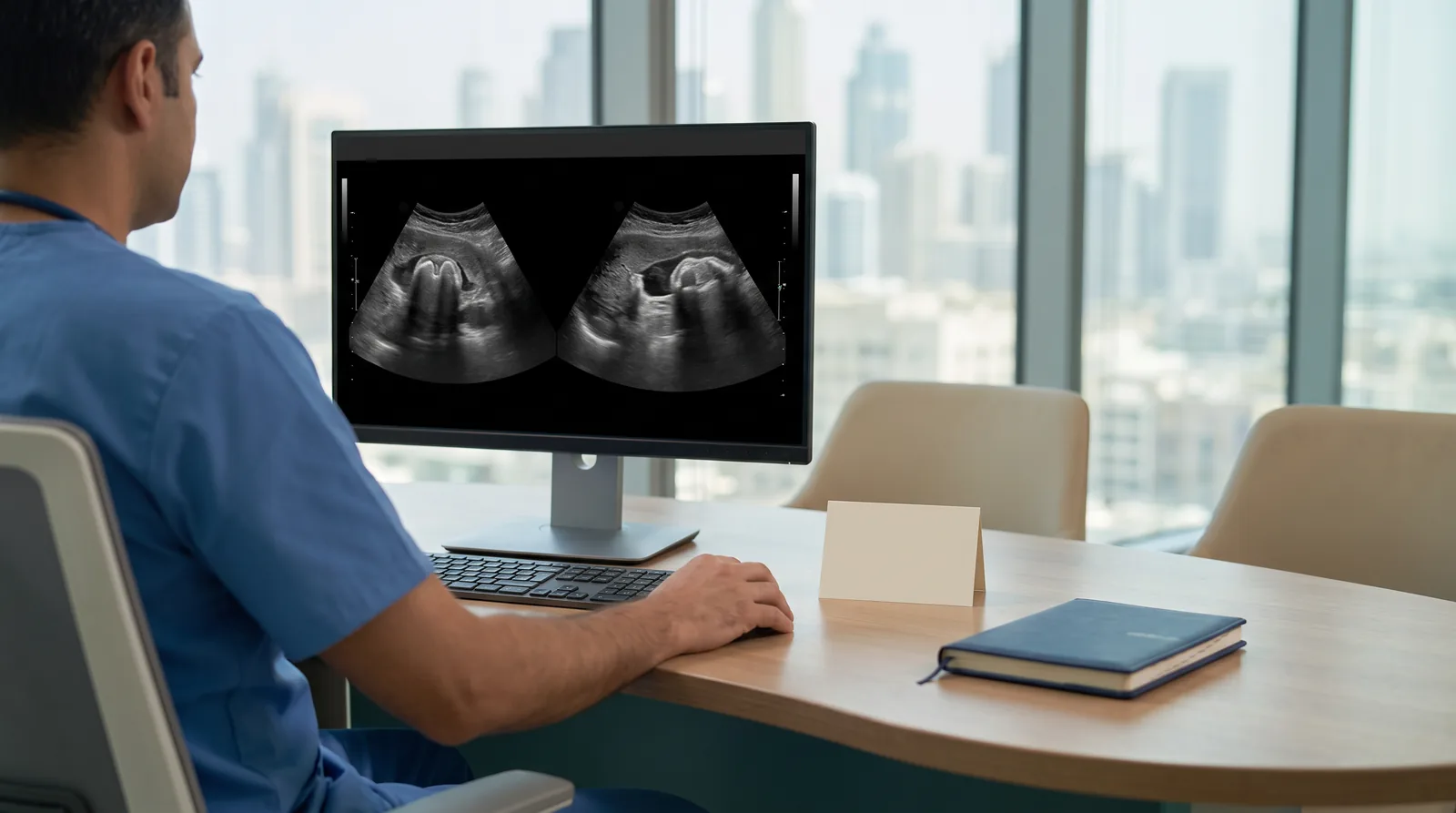
**Ultrasound** uses sound waves and does not use ionising radiation. It may be used to evaluate the implant shell, the tissue around it, fluid collections, a local lump, or lymph nodes under the arm. It is often a practical first discussion point for a new local symptom and is also accepted as a screening option for silent rupture in people without symptoms who have silicone gel-filled implants. The usefulness of ultrasound depends on the clinical question, the equipment, and the experience of the imaging team. An uncertain or incomplete result does not necessarily mean there is a serious problem; it may simply mean that another examination is needed for clarification.
**MRI** is particularly valuable when implant integrity needs more detailed assessment. MRI without contrast is commonly used for suspected silicone implant rupture and can detect ruptures that may not change how the breast looks or feels. A contrast-enhanced MRI is a different examination and may be considered when the concern relates to breast tissue or a suspected implant-associated malignancy. The choice between these studies is clinical, not a matter of choosing the “best” scan in every situation. Medical history, implanted devices, kidney function where contrast is considered, claustrophobia, availability, and the preceding imaging result may all be relevant to the conversation.
**Mammography or tomosynthesis** remains important for breast-cancer screening when it is appropriate for a person’s age and risk. Implants do not remove the need for routine breast-health screening. When booking, tell the imaging centre that you have implants and whether they were placed for augmentation or reconstruction. The team can use implant-displacement views when suitable and adapt the examination to the clinical situation. Mammography has a different job from a non-contrast MRI for implant rupture; one should not be assumed to substitute for the other.
Routine surveillance and symptom-led assessment
Silicone gel-filled implants can rupture without obvious symptoms, which is why planned imaging may be discussed even when a person feels well. A widely used regulatory framework is to consider ultrasound or MRI beginning around five to six years after silicone implant placement, followed by repeat imaging at intervals such as every two to three years. This is guidance for surveillance, not a personal guarantee, a deadline, or a prediction that an implant will fail. The treating clinician should tailor the timing and modality to the device, clinical history, prior imaging, symptoms, and current local guidance.
Saline-filled implants often deflate in a way that causes a noticeable change in size or shape, so the pathway can differ. Both saline and silicone devices can be associated with issues that deserve a professional review, including pain, hardening, asymmetry, a new lump, altered position, or a change in sensation. Do not try to diagnose rupture by touch alone, and do not wait for a planned surveillance appointment if a new concern develops.
Prompt assessment is particularly important for persistent swelling around one implant, a new mass, ongoing pain, or a late change in shape. These changes have many possible explanations, and most do not establish a diagnosis by themselves. They do, however, need an appropriate clinical assessment. Breast implant-associated anaplastic large cell lymphoma (BIA-ALCL) is an uncommon lymphoma that can occur in the fluid or scar tissue around an implant; risk is higher with textured-surface implants than smooth ones. It is not breast cancer. Persistent swelling, a mass, or pain near an implant should be evaluated rather than self-monitored. Sudden marked swelling, redness with fever, severe pain, or feeling acutely unwell warrants urgent medical advice.
Some people report broad symptoms such as fatigue, joint discomfort, rash, or difficulty concentrating and use the term breast implant illness. These symptoms are real experiences, but their causes are not fully understood and can overlap with many health conditions. A careful medical review should consider the whole person rather than assuming that an implant is or is not the explanation.
Building a follow-up plan that remains useful
A long-term plan works best when it is simple enough to maintain. At a routine review, the discussion can cover current symptoms, breast and implant changes, the condition of scars and surrounding tissue, the implant record, any prior imaging, and the person’s usual breast-health screening plan. It can also clarify who should be contacted if a concern appears between visits. For people with a textured implant or an implant from an older procedure, knowing the exact device information is useful, but an asymptomatic patient should not make a removal decision based on a message online or the passage of time alone.
Bring previous reports or images whenever possible. Comparison may show that an appearance is stable, or it may help the radiologist focus on a genuine new finding. Ask practical questions: What question is this test meant to answer? Is the study assessing the implant, breast tissue, or both? Would an ultrasound result change the next step? What symptoms should trigger an earlier review? What will happen if the result is uncertain? Clear answers support informed choices and avoid treating imaging as a pass-or-fail test.
There are limits to every plan. A normal examination does not promise that future complications cannot occur. An imaging finding may require correlation with symptoms, an examination, earlier images, or occasionally further tests. Conversely, discomfort or contour change does not automatically mean rupture, cancer, or a need for surgery. Follow-up is safest when decisions are made with a qualified clinician who can place the result in the full medical context.
Frequently Asked Questions ### Does ultrasound replace MRI for every person with implants?
No. Ultrasound is an accepted option for planned screening of silent rupture in asymptomatic silicone implant patients and is often useful for local symptoms. MRI may be better suited when more detail about silicone implant integrity is needed or when an ultrasound result is inconclusive. The right study depends on the question being asked, not on a universal hierarchy.
If I have a mammogram, does it also check whether my implant is intact?
Not reliably. Mammography and tomosynthesis are primarily breast-tissue examinations used in screening or diagnosis. They can be part of care for someone with implants, but they do not replace an implant-focused assessment when rupture or another implant complication is suspected. Always tell the imaging centre about your implants before the appointment.
Should an implant be removed or replaced after a set number of years?
There is no universal replacement date. The decision may be discussed because of symptoms, imaging findings, capsular changes, device complications, reconstruction goals, or personal preferences. It should follow an individual assessment of benefits, risks, and alternatives rather than a fixed timetable.
**Medical notice:** This article provides general education and is not a diagnosis, imaging order, or individual treatment recommendation. New or persistent breast or implant changes should be assessed by a qualified healthcare professional.
For a consultation about breast implant monitoring, imaging questions, or a personalised follow-up discussion, explore our breast procedures.