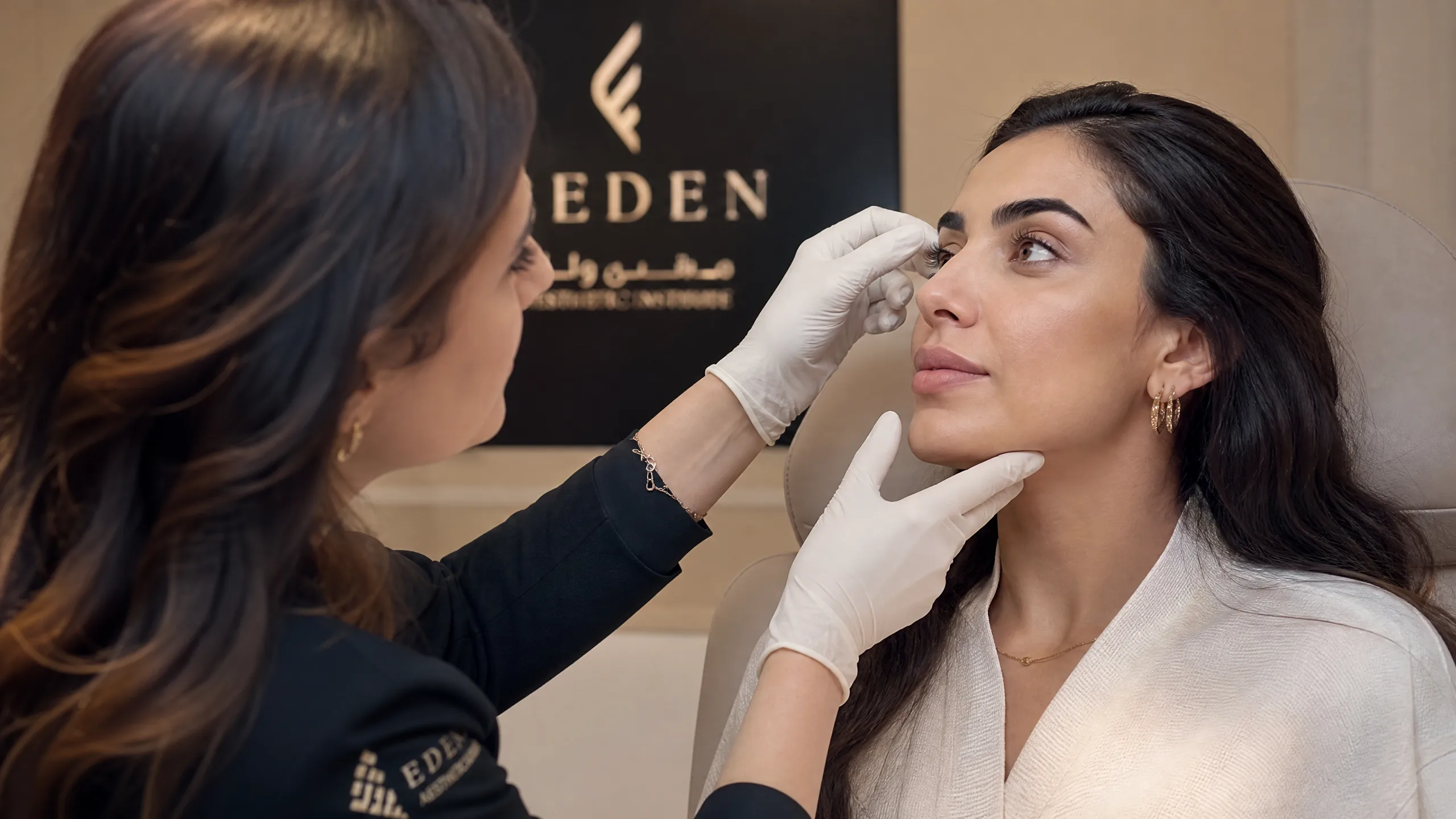
The periocular region is the focal point of human expression and often the first area to exhibit signs of fatigue and chronological aging. Upper blepharoplasty removes redundant hooding skin that can obstruct peripheral vision and obscure the natural eyelid crease, while lower blepharoplasty addresses herniated orbital fat (under-eye bags) and smooths the tear trough transition. At Almanara Emirates, precise micro-surgical incisions are placed within natural skin creases or transconjunctivally (inside the eyelid) to ensure absolute invisibility of scars.
Combining eyelid rejuvenation with non-surgical laser resurfacing or subtle fat repositioning delivers harmonious, wide-awake results. With swift recovery times and minimal discomfort, patients rediscover a refreshed, vibrant expression that radiates vitality.
Frequently Asked Questions
What can eyelid surgery address?
Depending on the examination, eyelid surgery may address selected excess skin or under-eye fullness. It is not a universal treatment for every eye or facial concern.
Can dry eyes occur after eyelid surgery?
Dryness, watering or temporary visual changes can occur during early healing in some patients. Previous eye symptoms should be disclosed and persistent or worsening symptoms need medical assessment.
How long is recovery after blepharoplasty?
Early swelling and bruising often improve gradually, but recovery varies by the procedure and individual healing. The surgeon should provide instructions for activity, eye care and follow-up.
When should I seek urgent assessment after eyelid surgery?
Sudden or reduced vision, severe new eye pain, rapidly increasing swelling or pressure, significant bleeding or a bulging eye require immediate medical assessment rather than waiting for routine follow-up.