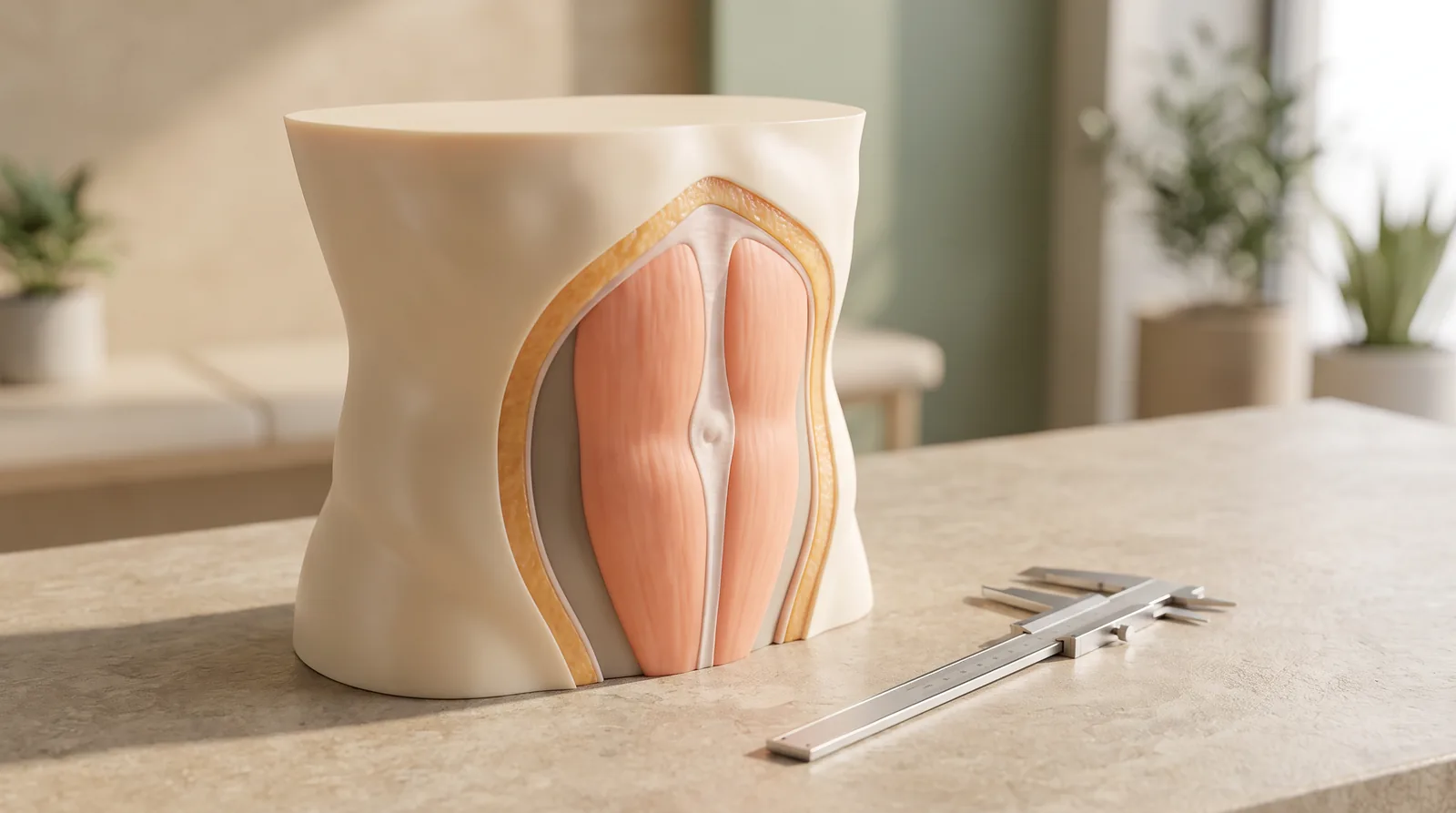
Loose upper-arm skin can affect comfort in clothing and how someone feels when lifting or extending the arms. It is especially common after substantial weight change, but it can also reflect ageing, inherited skin characteristics, or changes in the underlying soft tissue. An arm lift, also called **brachioplasty**, is a surgical contouring procedure that removes selected excess skin and may reshape supportive tissue; fat treatment may be considered in some cases. The defining decision is not simply whether the arm can be made tighter. It is whether the expected change in contour is worth a permanent scar, the recovery commitment, and the surgical risks for that individual.
A useful consultation frames brachioplasty as a trade-off rather than a quick fix. The goal is to understand what is creating the visible fullness or laxity, where it is located, how the skin behaves, and what can realistically change. This article explains the questions behind that decision, with particular attention to scar placement and a recovery plan built around safety rather than a fixed timetable.
Is brachioplasty the right type of contouring?
Brachioplasty is principally a procedure for **excess, lax skin** of the upper arm. Exercise can improve muscle strength and tone, and stable nutrition and activity can support general health, but neither can reliably remove a large skin envelope that no longer retracts. When laxity runs from the underarm toward the elbow, a skin-removal procedure may be the option that directly addresses it.
Not every concern about the upper arm points to an arm lift. Some people mainly have localised fat with elastic skin. In that situation, a surgeon may discuss whether liposuction alone is appropriate, or whether it could make loose skin more apparent. Others have a small area of redundant skin close to the underarm, while some have excess that continues onto the side of the chest after major weight loss. The distribution of tissue, rather than a label such as “bat wings,” guides the discussion.
A good candidate assessment usually looks beyond an arm photograph. It considers skin quality, the amount and direction of laxity, asymmetry, the relationship of the upper arm to the underarm and chest, and the person’s usual arm movement. Weight that has been relatively stable gives the surgeon a more reliable starting point. Future large weight fluctuations can alter the contour again, even after a carefully performed lift.
General health matters as much as the visible concern. Healing capacity, diabetes control, circulation, anaemia, medications and supplements, prior surgery, history of clotting, and a history of thick or raised scars may change the risk conversation. Nicotine exposure can interfere with wound healing, so it must be disclosed honestly. The operating team should also know about previous underarm procedures, arm swelling, lymphatic problems, radiation treatment, or changes in sensation. These issues do not automatically decide the answer, but they deserve individual assessment.
Finally, a suitable candidate can accept a fundamental fact: **the removal of significant skin requires an incision and therefore a scar**. A clear understanding of that exchange is more valuable than pursuing an idealised image. The consultation should leave room to decide against surgery or to defer it while health or weight is being stabilised.
Scar placement: matching the line to the tissue pattern
Scar planning is central to brachioplasty, not a detail to be discussed after the decision. The incision pattern is chosen to provide enough access and skin removal while trying to place the resulting line as discreetly as anatomy allows. There is no location that makes a scar invisible in every arm position, garment, or light.
A limited-incision lift may leave a scar largely within the underarm crease. It is generally considered only when the loose tissue is modest and concentrated near that area. This shorter-scar approach may be appealing, but it cannot reliably correct laxity that extends down the arm. Asking a short incision to treat a long segment of redundant skin can leave residual looseness or create excessive tension.
With more extensive laxity, the scar commonly travels from the underarm along the inner or more posterior aspect of the upper arm and may approach the elbow region. When excess tissue includes the underarm or lateral chest, an extended pattern can continue beyond the underarm toward the side of the chest. These patterns are not interchangeable upgrades. They reflect the location and extent of skin that needs to be addressed.
During consultation, it helps to look at proposed scar placement with the arms relaxed, raised, and moving. Ask the surgeon to explain the intended line in relation to sleeveless tops, short sleeves, and your own usual activities. The answer should include what may still be visible from the front, side, or back. “Hidden” is not an honest promise; a more realistic aim is thoughtful placement and closure with an understanding of the trade-off.
Scar appearance evolves and varies. Early scars can be red, firm, uneven, or more conspicuous before they mature. Factors such as genetics, skin tone, tension across the closure, infection, delayed healing, sun exposure, smoking, and weight changes can influence how a scar settles. A surgeon may discuss a scar-care plan only after examining healing and according to their protocol. No cream, sheet, massage technique, or procedure can guarantee a particular scar outcome.
Recovery planning: protect the closure and preserve daily independence
Recovery is easier to manage when it is planned before surgery. The immediate aftercare may include dressings, a compression garment, and sometimes drains, depending on the technique and the surgeon’s judgement. Instructions for garment use, bathing, wound care, medicines, sleeping position, and follow-up must come from the treating team. They are not interchangeable between patients or clinics.
The key practical issue is that the upper arm is involved in ordinary tasks: pushing up from a chair, lifting a child, reaching for a shelf, fastening a seat belt, carrying shopping, and opening heavy doors. Movements that pull on the incision or increase swelling may need to be modified during the phase set by the surgical team. Rather than asking for a universal date for returning to work, discuss the physical demands of your job, commute, home responsibilities, driving, exercise routine, and available help. Desk-based work and a role that requires lifting, repetitive reaching, or manual handling may need very different arrangements.
Prepare a low-effort home set-up. Place frequently used items within easy reach, arrange practical support if needed, and plan transport for appointments. Loose front-opening clothing can be simpler than garments that must be pulled over the head. Hydration, regular nourishing meals, avoiding nicotine, and following the prescribed movement and rest advice all support recovery, but they do not replace clinical review.
Follow-up appointments are part of the procedure, not an optional extra. They allow the team to examine the incisions, manage dressings or drains if present, assess swelling and sensation, and advise when activity can progress. Swelling, bruising, tightness, temporary numbness, and unevenness can all make an early appearance difficult to interpret. A cautious approach gives tissues time to heal; the pace should be determined by the surgeon who can examine you.
Treatment limits and safety: what must remain in the conversation
Brachioplasty can reshape the upper-arm contour, but it is not a weight-loss treatment and it does not stop ageing or prevent future skin laxity. It cannot promise symmetry, a completely smooth surface, normal sensation at every stage, or an imperceptible scar. Liposuction, if discussed, changes fat but does not substitute for skin removal when poor elasticity is the main issue. Conversely, removing skin does not treat every concern about muscle definition, skin texture, or the forearm.
As with other operations, risks include bleeding, fluid collection, infection, wound separation or delayed healing, changes in sensation, pain, asymmetry, adverse scarring, and a possible need for further treatment. There are also anaesthesia-related risks and uncommon but important risks involving deeper structures. Individual risk depends on the procedure, health history, examination findings, and peri-operative plan. A pre-operative assessment and informed consent discussion should be specific rather than generic.
Contact the treating surgical team promptly for symptoms they have identified as urgent. Examples that warrant prompt clinical advice include rapidly increasing swelling, persistent or heavy bleeding, fever, spreading redness, concerning drainage, pain that is not controlled as expected, new changes in hand or arm movement or sensation, or signs of an allergic reaction. Chest pain, shortness of breath, or sudden severe symptoms require emergency assessment. Do not wait for a routine appointment when a potentially serious problem is developing.
Frequently Asked Questions ### Can arm liposuction replace an arm lift?
Sometimes liposuction may be discussed when fullness is mainly fatty tissue and the skin is likely to contract adequately. It does not remove loose skin. Where there is significant laxity, removing fat alone may leave the skin envelope unchanged or make it appear more pronounced. A physical examination is needed to compare these possibilities.
Will the scar be completely hidden?
No arm-lift scar can be guaranteed invisible. A limited procedure may concentrate the scar in the underarm, while a standard or extended lift usually needs a longer line to treat broader laxity. The better question is whether the expected scar location and likely visibility are acceptable to you in the clothing and movements that matter in daily life.
How should I organise work and family responsibilities after surgery?
List the activities that involve lifting, pushing, reaching, driving, or caring for others, then review them with the surgeon before setting a date. Arrange help where those tasks cannot be avoided. Your return plan should be based on the procedure performed, your healing at follow-up, and the demands of your role—not on someone else’s recovery story.
**Medical notice:** This article provides general education and is not a diagnosis, a treatment recommendation, or a substitute for a consultation with a qualified plastic surgeon. Personal suitability, incision choice, scar management, and recovery restrictions can only be determined after an individual assessment.
For more information about surgical body contouring options, explore the Body Contouring procedures.