# Abdominoplasty After Weight Loss: Excess Skin and Realistic Options
A substantial weight change can be an important health milestone, whether it follows lifestyle changes, medical weight management, or bariatric surgery. It can also leave loose abdominal skin, a hanging fold, or a contour that no longer reflects the effort invested. This does not mean weight loss has “failed.” After major loss, skin and support tissues may not contract to the smaller body size. The American Society of Plastic Surgeons (ASPS) describes post-weight-loss body contouring as surgery that removes excess sagging skin and fat while improving the shape of underlying support tissue.
What a tummy tuck can—and cannot—address
**Abdominoplasty**, commonly called a tummy tuck, is a surgical contouring procedure, not a method of weight loss. Depending on the plan, it can remove excess abdominal skin and some fat, reposition the remaining skin, and tighten the connective tissue (fascia) over the abdominal muscles. Liposuction may sometimes be used alongside it to refine selected areas, but it does not remove significant redundant skin on its own.
A realistic aim is a smoother, more proportionate abdominal contour in clothes and day-to-day life. It is not a promise of a perfectly flat abdomen, permanent immunity from future body changes, or removal of every stretch mark. Stretch marks within skin that is removed may no longer be present; marks in retained skin can remain. The scar is permanent, although surgeons generally plan it as low as possible within the underwear or swimwear line. Its length, colour, and maturation vary between people and techniques.
Why fitness and non-surgical treatments may have limits
Nutrition and physical activity remain valuable for health, weight maintenance, and core strength. They cannot, however, determine whether longstanding stretched skin will contract enough to avoid skin removal. Non-surgical skin-tightening treatments may be discussed for modest laxity in selected people, but they are not equivalent to surgically removing a substantial overhang. A safe recommendation requires an in-person assessment of skin amount and quality, fat distribution, prior scars, health status, and goals—not a photo-based or remote diagnosis.
Procedure choices are individual
There is no universal “best” operation after weight loss. When extra skin is mainly below the navel, a limited or mini abdominoplasty may be discussed for selected patients. When laxity extends above the navel or involves the broader abdominal wall, a full abdominoplasty may be more relevant. Excess tissue that continues around the flanks, back, or buttocks may lead to discussion of a more extensive lower body lift. These are distinct procedures, and an extensive operation is neither necessary nor suitable for everyone.
Staging treatment can be preferable to combining multiple areas in one operation. The decision is based on safety, operative time, health history, wound-healing considerations, and the care plan—not on an expectation to address every concern at once. At a Dubai consultation, it is useful to share prior abdominal operations, your weight history, medications and supplements, nicotine use, and any plans for pregnancy.
When is the timing right?
Weight stability matters. Mayo Clinic notes that, ideally, a patient keeps a stable weight for at least 6 to 12 months before abdominoplasty, since substantial loss after surgery can alter the result. A surgeon may recommend delay if future pregnancy is planned, if obesity, smoking, clotting risk, or health conditions could increase risk or compromise healing are present. ASPS similarly lists stable weight, good health, non-smoking status, realistic goals, and commitment to healthy nutrition and fitness among general features of appropriate body-contouring candidates.
These points are not a self-screening checklist or a diagnosis. Suitability is decided by the doctor after a medical history, physical examination, medication review, and discussion of priorities. Following rapid loss or bariatric surgery, the clinical team may also consider nutritional assessment and relevant tests as part of safe pre-operative planning.
Recovery and risk: clear expectations
Abdominoplasty is major surgery. Temporary swelling and discomfort are expected, and drains may be used for a limited time in some treatment plans. Under the surgical team’s instructions, early walking supports circulation and can help reduce clot risk. Bending, strenuous activity, heavy lifting, and exercise may need to be restricted while tissues heal. The timeline for work, driving, exercise, and visible settling differs by person and by procedure; another patient’s recovery schedule is not a reliable forecast for yours.
Potential risks to discuss include fluid or blood collection beneath the skin, bleeding, infection, delayed or poor wound healing, changed sensation, scarring, tissue injury, anaesthetic complications, and blood clots. Further treatment or a later procedure may occasionally be needed. Smoking can reduce skin blood flow and raise the risk of tissue-healing problems, so it is important to disclose nicotine use and follow the surgeon’s cessation instructions. No ethical consultation should guarantee a result, a scar appearance, or an exact recovery period.
Preparing for a constructive consultation
Ask which factor is most relevant in your case: excess skin, remaining fat, abdominal-wall laxity, or a combination. Ask what each proposed step can genuinely treat, where scars are expected, whether drains or a support garment may be used, what home support is advisable, and which symptoms require prompt contact with the clinic. You can also discuss the surgeon’s qualifications, the licensed facility, and the follow-up plan. Informed choice is not about pursuing perfection; it is about understanding the likely trade-offs and choosing only when the plan is appropriate.
Consider a personal assessment
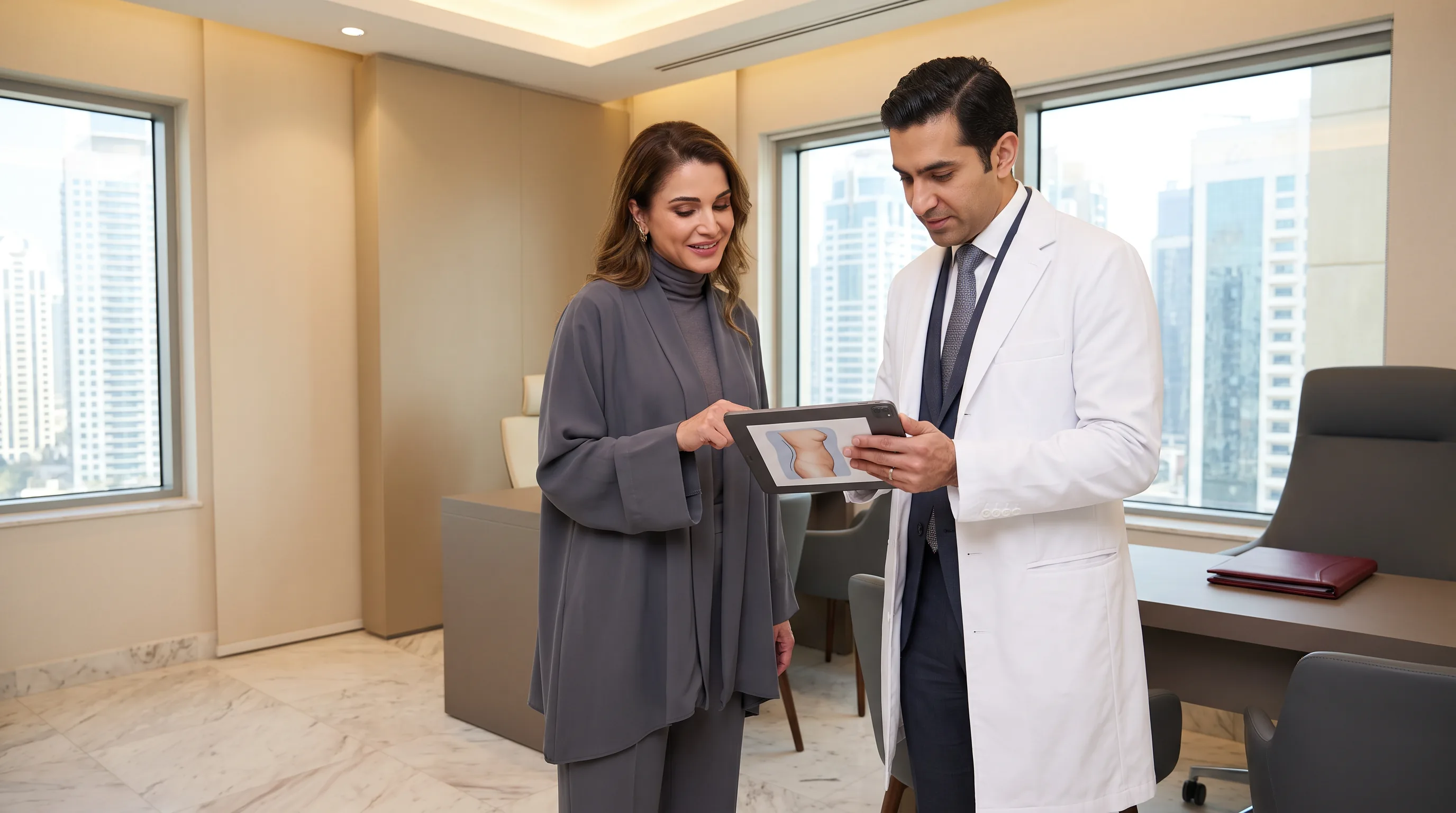
If excess skin after weight loss affects comfort, clothing fit, or how you feel in your body, consider booking an **Abdominoplasty consultation** with a qualified plastic surgeon in Dubai. A consultation is not a commitment to surgery. It is a chance to discuss your individual suitability, realistic alternatives, risks, recovery, and a care plan tailored to your circumstances.
A considered next step
For a personal assessment, visit the body contouring procedure page and request a consultation with the medical team. Suitability, options and risks can only be determined after an in-person evaluation.
Frequently Asked Questions
Does abdominoplasty remove weight?
No. Abdominoplasty is a contouring operation, not a weight-loss treatment. It may remove excess skin and some fat, but the surgeon will assess whether your weight and health are appropriate before surgery.
Will all stretch marks and loose skin disappear?
Stretch marks in skin that is removed may improve, but marks in skin that remains can persist. The amount of skin that can be removed and the expected scar are individual matters discussed during examination.
How long should weight be stable before a tummy tuck?
Mayo Clinic notes that stable weight for 6 to 12 months is ideal before abdominoplasty. Your surgeon may advise a different timeline based on your health, weight history, and planned pregnancy.
Can liposuction replace abdominoplasty for excess skin?
Generally, no. Liposuction targets fat and does not remove a significant skin overhang. In selected cases it may be combined with abdominoplasty, but the right approach is determined after clinical assessment.